
How to Communicate HR Policy Changes to Employees: A 2026 UK Employer Guide
- Pioneer HR
- Jul 1
- 12 min read
Updated: 5 days ago
Did you know that 45% of businesses still need professional guidance to align their internal policies with the massive 2026 legal shifts? It's a daunting figure, especially when the launch of the Fair Work Agency means that non-compliance with rules on holiday pay or the £123.25 weekly Statutory Sick Pay rate now carries immediate financial risks. We know that many UK employers feel a sense of anxiety regarding these new day-one rights and the heightened preventative duty on harassment. Mastering how to communicate hr policy changes to employees uk is no longer just a task for the HR department; it's a strategic necessity to maintain trust and protect your organisation from legal repercussions.
We believe that clear, empathetic communication is the bridge between complex legislation and a thriving company culture. In this guide, we'll show you how to translate these technical updates into a narrative that supports your staff while ensuring your employee handbook is legally robust. We'll walk through a structured strategy for rolling out changes to paternity leave, whistleblowing protections, and the new minimum wage of £12.71. By the end of this article, you'll have a clear roadmap to ensure your team feels secure, your morale remains high, and your business stays ahead of the 2026 compliance curve.
Table of Contents
Why 2026 Requires a New Approach to HR Policy Communication
The Employment Rights Act 2025 has fundamentally rewritten the contract between UK employers and their staff. This isn't a minor administrative update; it's a complete shift in the power dynamic of the modern workplace. For businesses in London and Kent, the stakes have never been higher. We've moved past the era where you could wait two years for certain rights to kick in. Now, everything from Statutory Sick Pay to paternity leave is a day-one reality. Understanding how to communicate hr policy changes to employees uk effectively is the only way to stay compliant while keeping your company culture intact.
Many firms are tempted to treat the April 2026 deadline as a simple paperwork exercise. However, a "find and replace" approach to your employee handbook is a high-risk strategy. It fails to account for the nuance of the law and, more importantly, it misses the opportunity to build psychological safety. When you simply swap out a few sentences without explanation, you leave room for anxiety and misinformation to spread through your teams. Strategic retained HR support can help bridge this gap by ensuring your messaging is as robust as your legal documentation.
The Scale of the 2026 Legislative Shift
We're witnessing the biggest shake-up in employment law for a generation. SMEs in the South East are particularly vulnerable to compliance lag because they often lack the massive internal departments found in global corporations. Proactive communication is vital. Grounding your strategy in established Human Resource Management principles ensures that you aren't just following the law; you're building a sustainable relationship with your team. This shift requires moving from a narrative of "qualifying periods" to one of "day-one security." Your onboarding process now needs to highlight that new hires are protected from their very first morning, which is a powerful tool for recruitment if handled correctly.
The Risks of Poor Communication
The Fair Work Agency is the new regulatory body overseeing UK employment standards from 2026, and they have the authority to inspect records and issue fines directly for non-compliance. "Silent" policy updates won't satisfy their requirements or your employees' expectations. If your staff feel left in the dark about changes to the £123.25 weekly SSP rate or the £12.71 minimum wage, you risk eroding trust and facing increased protective awards. In 2026, a tribunal claim's compensatory award can reach up to £123,543. That's a price no SME can afford to pay for a communication failure. Clear, structured updates are your best defence against both legal repercussions and a drop in morale.
Communicating the "Big Two": Statutory Sick Pay and Day-One Rights
The transition to the 2026 standards requires a delicate touch when discussing financial and leave entitlements. We're moving from a system of "earned" rights to one of "automatic" protections. This shift is most visible in Statutory Sick Pay (SSP) and parental leave. When you're considering how to communicate hr policy changes to employees uk, focus on how these updates provide a safety net for your team from their very first hour of work. It's a significant cultural change that signals a more supportive and inclusive workplace environment.
The SSP revolution is perhaps the most significant operational change for your payroll and management teams. From April 6, 2026, the weekly rate is £123.25. More importantly, the three-day waiting period has been abolished. Employees are now eligible for payment from day one of sickness, and the Lower Earnings Limit has been removed. This means every member of your team, regardless of their pay grade, is covered. We suggest framing this as a commitment to health and wellbeing rather than just a mandatory legal update.
Managing the SSP Conversation
We recommend being transparent about the business impact of these changes. Removing the waiting period will likely increase short-term absence costs for many SMEs. By explaining the new £123.25 rate and the removal of the earnings threshold clearly, you prevent confusion at the payroll level. It's helpful to refer to the official Acas guidance on sick pay changes to provide a neutral, authoritative baseline for your internal announcements. This helps staff understand that these shifts are part of a nationwide standard.
As these costs rise, many businesses are reviewing their total compensation packages. You might find it useful to explore salary benchmarking uk to see how your overall package remains competitive while absorbing these new statutory requirements.
Onboarding in the Age of Day-One Rights
Recruitment narratives must change. Managers in London or Hove need to understand that Paternity Leave and Unpaid Parental Leave are now immediate rights. The previous 26-week service requirement for Paternity Leave is a thing of the past. We've also seen the introduction of Bereaved Partner’s Paternity Leave, which requires a particularly empathetic communication style. These sensitive updates should be handled with discretion and a clear focus on the support the company provides during difficult times.
Updating your contracts and handbook isn't just a legal necessity; it's a way to signal your values to new hires. Ensuring your HR Retainer support includes a review of these day-one clauses will prevent awkward misunderstandings during the onboarding process. To balance these new costs with employee motivation, consider refining your broader Reward Strategy to ensure you're attracting the right talent in this new legislative landscape.
The "Preventative Duty": Communicating Harassment and Whistleblowing Updates
While the financial updates to sick pay are immediate, the cultural shift regarding workplace safety is perhaps more profound. From October 2026, the legal standard for employers moves from taking "reasonable steps" to "all reasonable steps" to prevent sexual harassment. This isn't a subtle change in wording; it's a significant increase in your liability, including responsibility for the actions of third parties like clients or customers. Determining how to communicate hr policy changes to employees uk regarding these sensitive topics requires a balance of legal precision and human empathy. We help you move beyond a simple document update to create a genuine environment of safety.
The new whistleblowing standards effective from April 6, 2026, further reinforce this. Disclosures about sexual harassment are now explicitly recognised as "protected disclosures." This means employees are protected from detriment or dismissal from their very first day. We must be clear with our teams that non-disclosure agreements (NDAs) can no longer be used to silence these complaints. For professional services in Kent or hospitality firms in Sussex, this requires a transparent dialogue about how you handle reports and the protections you offer to those who speak up.
Building a Culture of Safety
Having a policy tucked away in a digital folder is no longer sufficient to meet the preventative duty. We recommend running internal workshops to ensure every staff member understands their rights and your expectations. This proactive approach does more than just tick a compliance box; it directly impacts employee engagement. When people feel safe and respected, they're more productive and loyal. Your communication should frame these updates as a commitment to a modern, respectful workplace where every voice is heard and protected.
Enforcement and the Fair Work Agency
The launch of the Fair Work Agency (FWA) in April 2026 introduces a new level of scrutiny for SMEs. The FWA has the power to inspect your records and issue fines without a tribunal hearing. We suggest using a comprehensive HR Audit to identify any gaps in your current harassment or whistleblowing procedures. By identifying these issues early, you can tell your team that you're moving from a "compliance checklist" to a genuine commitment to fair work. This transparency builds trust and demonstrates that your leadership team is proactive rather than reactive.
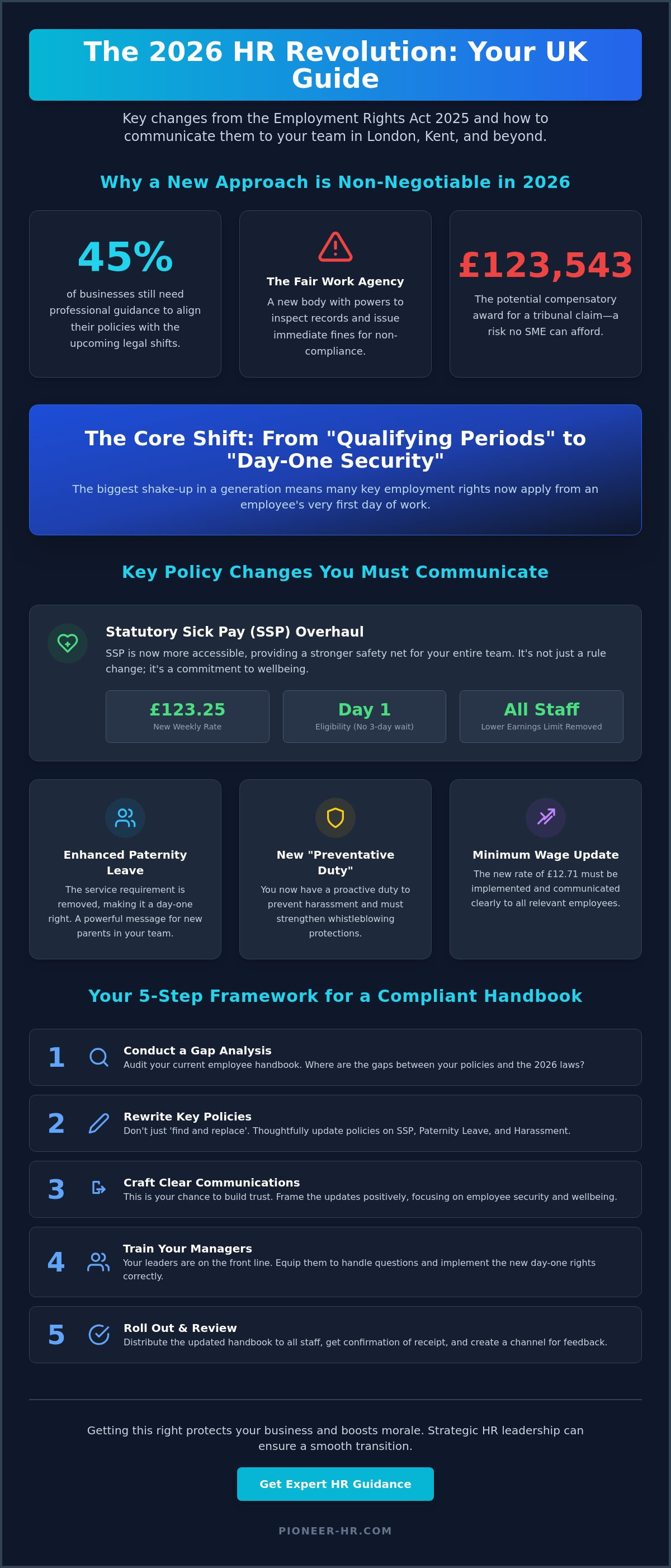
A 5-Step Framework for Auditing and Updating Your Employee Handbook
Updating a handbook isn't just about legal compliance; it's a strategic opportunity to reinforce your company culture. We've developed a structured approach to help you manage this transition smoothly. Knowing how to communicate hr policy changes to employees uk requires more than just a list of rules. It requires a logical sequence that builds understanding and trust across your entire organisation.
Step 1: Conduct a gap analysis. We recommend starting with a thorough review of your existing documents specifically against the Employment Rights Act 2025. Identify every clause that mentions service requirements or earnings thresholds. Step 2: Prioritize the April 1st deadline. Focus your immediate efforts on "Day-One" rights and the new SSP regulations. These are the most visible changes and carry the highest risk if not addressed by the start of the new financial year.
Step 3: Align your compensation structure. New pay transparency requirements mean you should review your Job Grading framework now. This ensures that pay scales are defensible and clear. Step 4: Train your leadership. Kent and London-based line managers need specific coaching on the "right to switch off" and the shift toward default flexible working. They are your first line of communication and must be prepared for staff questions. Step 5: Roll out the summary. Once the technical work is done, present the updates in a digestible format.
The Policy Audit Checklist
Remove all service requirements from Paternity and Parental leave clauses to reflect immediate eligibility.
Update SSP sections to confirm payment from day one and the removal of the Lower Earnings Limit.
Insert the mandatory Bereaved Partner’s Paternity Leave section to provide clarity on this sensitive new entitlement.
Modern Communication Methods
Sending a massive PDF via email is no longer sufficient for major legislative shifts. It's easy for staff to miss the nuance or feel overwhelmed by the technical language. Instead, we suggest using reward consultancy insights to explain the true value of these new benefits to the individual. A "What’s Changed" summary is the most effective tool for ensuring employee comprehension, as it allows staff to see exactly how the new laws affect their daily working lives. If you need support with this transition, our HR Audit services can provide the clarity you need to move forward with confidence.
Navigating the 2026 Transition with Strategic HR Leadership
Many SMEs across Sussex and London are reaching a pivotal realization; the 2026 legislative landscape is simply too complex to manage without dedicated expertise. The shift toward outsourced HR support isn't just about avoiding the Fair Work Agency's fines. It's about securing the future of the organisation. When you're deciding how to communicate hr policy changes to employees uk, having a partner who understands the nuance of the law allows you to lead with confidence. This is where a Fractional Chief People Officer becomes invaluable. They bridge the gap between high-level legislative planning and daily operational reality, ensuring that your business strategy aligns with the new "all reasonable steps" standard for harassment prevention.
We believe your employee handbook should never be a static file on a server. Through Pioneer HR's retained support, we ensure your handbook remains a "living" document that evolves alongside the law. This tailored approach is essential because a tech startup in Brighton faces different cultural challenges than a traditional manufacturing firm in Kent. By localising your messaging and focusing on the specific concerns of your sector, you demonstrate a level of care that goes beyond basic compliance. It shows your team that you value their security as much as your own legal protection.
Beyond Compliance: The 2026 Talent Strategy
We encourage our partners to view these legislative shifts as a unique competitive advantage. In a tight labour market, being the employer that proactively explains day-one rights and the £123.25 SSP rate builds immediate trust with new hires. To ensure your compensation remains attractive while meeting the new £12.71 minimum wage, robust Pay Benchmarking is essential. This prevents you from falling into a "compliance-only" pay structure that might alienate your most experienced staff. Pioneer HR offers bespoke support to help UK businesses thrive during this legislative transition.
Your Next Steps for 2026
The deadline of April 2026 is approaching quickly, but there's still time to prepare. We suggest booking a 2026 HR health check for your Hove or London business to identify any immediate vulnerabilities in your contracts or communication strategy. Transitioning to a retained model offers the peace of mind that comes from knowing every legislative update is handled by experts. We invite you to contact Sarah-Jane and the Pioneer HR team to discuss how a strategic partnership can protect your business and empower your people. Together, we can ensure that your organisation doesn't just survive these changes but uses them as a foundation for sustainable growth.
Future-Proofing Your Workplace for 2026 and Beyond
The transition to 2026 standards represents a fundamental shift in UK employment culture. We've seen that success lies in moving from reactive compliance to proactive transparency. By focusing on day-one rights and the heightened preventative duty on harassment, you protect your organisation while building a more resilient, engaged workforce. Mastering how to communicate hr policy changes to employees uk—perhaps by utilizing high-quality internal media produced by experts like Rita House Productions—ensures that your staff feel secure and informed during these significant legislative shifts.
Pioneer HR brings over 30 years of expert UK HR experience to your team. We are specialists in London, Kent, and Sussex SME compliance, providing the strategic Fractional CPO leadership high-growth firms need to thrive. We understand that every business is unique; we're committed to helping you turn these legal requirements into a genuine competitive advantage for your brand.
Secure your business for 2026—explore our Retained HR Support today. We look forward to partnering with you to create a legally robust and people-focused future for your organisation.
Frequently Asked Questions
What is the most significant change in UK employment law for 2026?
The most significant shift is the move toward "day-one" rights, which grants employees immediate access to protections like Statutory Sick Pay and paternity leave. This change, driven by the Employment Rights Act 2025, essentially removes the traditional qualifying periods for many claims. It requires a total rethink of how to communicate hr policy changes to employees uk to ensure everyone understands their immediate entitlements from their first hour.
Do I need to update my employment contracts or just my handbook for 2026?
You'll likely need to update both to ensure full legal protection. While the handbook provides the detailed procedures and cultural context, your employment contracts must reflect the new statutory minimums for SSP and leave eligibility. Updating only the handbook leaves a gap between your operational reality and your core legal agreements, which can lead to costly disputes or breach of contract claims.
When exactly do the "day-one" rights for paternity leave start in the UK?
The new "day-one" rights for paternity leave and unpaid parental leave officially come into effect on April 6, 2026. From this date, the previous 26-week service requirement is abolished for all eligible employees. This means any staff member becoming a parent after this date is eligible for leave from the very start of their employment, regardless of how long they've been with your firm.
How does the new Fair Work Agency affect small businesses in Kent and London?
The Fair Work Agency (FWA) acts as a single enforcement body with the power to inspect records and issue fines directly to employers for non-compliance. For SMEs in Kent and London, this means the risk is no longer just a potential tribunal claim; it's a proactive regulatory risk. The FWA focuses heavily on holiday pay, minimum wage, and sick pay accuracy across all sectors.
What happens if I fail to update my SSP policy by the April 2026 deadline?
Failing to update your SSP policy by the April 2026 deadline puts you in immediate breach of the new statutory requirements. You risk direct fines from the Fair Work Agency and potential claims for unlawful deduction from wages if you continue applying the old three-day waiting period. It's critical to have your new payroll and communication processes ready before the new financial year begins.
Are there specific HR changes for businesses in London versus Sussex in 2026?
While employment law remains consistent across the UK, the communication approach often differs by region and sector. London firms often face higher scrutiny regarding pay transparency and flexible working, while Sussex-based SMEs might focus more on the "preventative duty" for harassment in hospitality or professional services. Understanding how to communicate hr policy changes to employees uk involves tailoring the message to your local sector's specific culture.
How much does a professional HR audit for 2026 compliance typically cost?
The cost of a professional HR audit depends on the size of your workforce and the complexity of your existing policies. While we don't quote fixed prices without a consultation, most businesses find that the investment is significantly lower than the cost of a single tribunal claim or an FWA fine. We recommend requesting a bespoke quote that reflects your specific organisational needs.
Can a Fractional CPO help with the Employment Rights Act 2025 transition?
A Fractional CPO is ideally placed to lead the transition through the Employment Rights Act 2025 by providing high-level strategic vision. They ensure that compliance isn't just a tick-box exercise but a way to strengthen your company culture and employer brand. This leadership helps you integrate these legal shifts into your broader talent strategy, ensuring your organisation remains attractive to top-tier talent.


Comments