
Disciplinary Procedure UK: The 2026 Employer’s Guide to Fair Management
- Pioneer HR
- 1 day ago
- 12 min read
What if a disciplinary meeting wasn't a source of dread, but a bridge to a better workplace culture? We understand that facing a formal process often feels daunting, especially with the 2026 legal landscape extending the employment tribunal claim limit to six months. It's natural to feel the weight of potential legal repercussions or the stress that comes with handling difficult conversations. We believe that a disciplinary procedure uk should be a tool for cultural restoration rather than just a defensive box-ticking exercise.
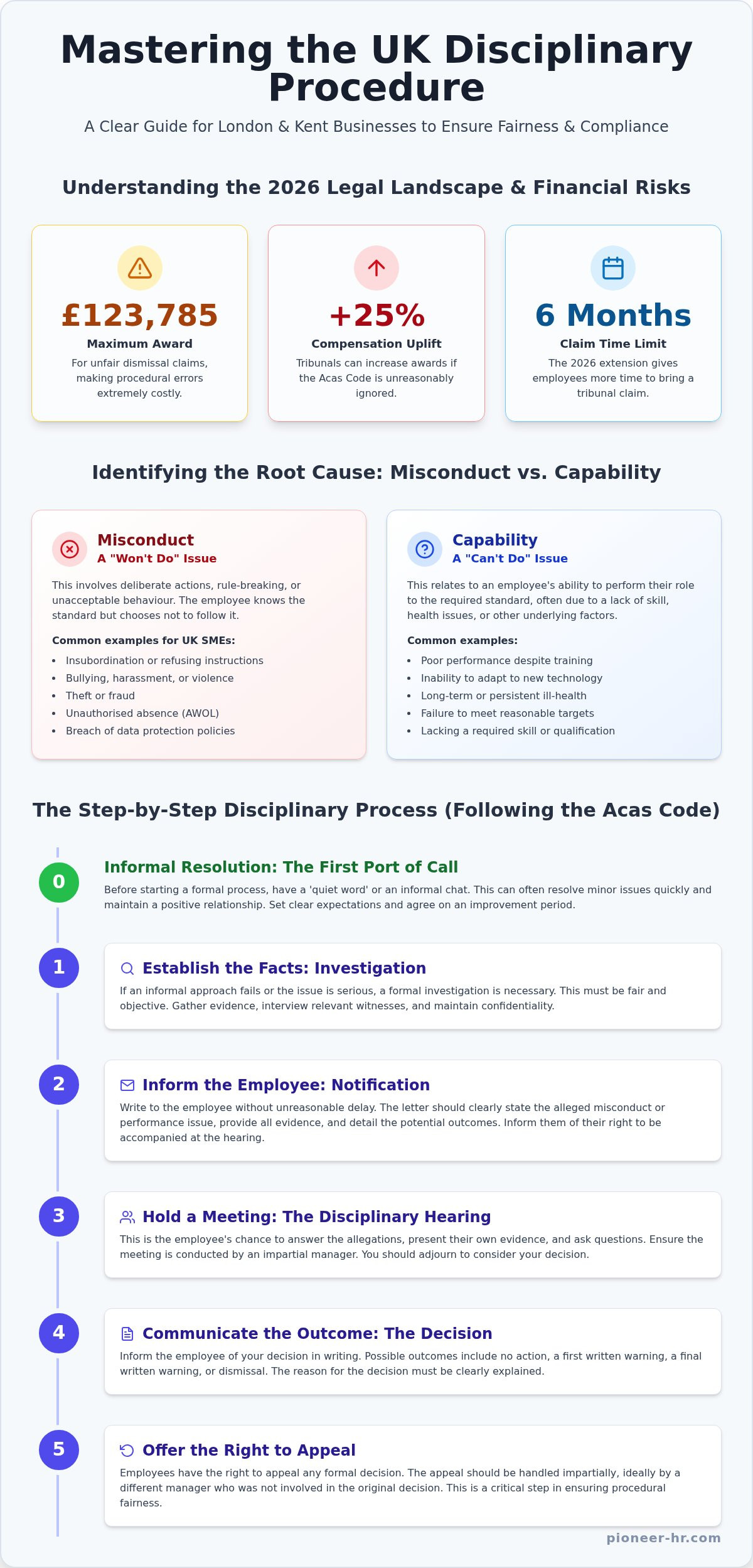
In this guide, we'll help you master these complexities so you can protect your business, support your team, and stay fully compliant with the latest Acas standards. You'll gain a clear, legally sound roadmap to resolve employee issues fairly while shielding your organization from the risk of a £123,785 unfair dismissal award. We'll explore the essential steps to ensure your management remains both empathetic and professional, providing the strategic clarity you need to move forward with confidence.
Table of Contents
Understanding the UK Disciplinary Procedure: Why Fairness Matters in 2026
Misconduct vs. Capability: Identifying the Root Cause of the Issue
The Step-by-Step Disciplinary Process: Following the Acas Code
Navigating Complex Challenges: Gross Misconduct and Remote Meetings
How Strategic HR Support Protects Your Business and Your People
Understanding the UK Disciplinary Procedure: Why Fairness Matters in 2026
A robust disciplinary procedure uk is more than a legal safety net; it's the foundation of a healthy, high-performing culture. We define it as a formal framework designed to address employee misconduct or poor performance with consistency and transparency. In the current 2026 climate, where the Employment Rights Act 2025 has significantly strengthened worker protections, your approach to these procedures directly impacts your employer brand. Precision matters. When we work with our partners, we ensure every policy reflects the latest statutory changes while maintaining a human touch.
In competitive markets like Kent and London, top talent looks for fairness. They want to know that if things go wrong, there's a clear path to resolution. If your process feels arbitrary or opaque, you risk more than just losing a team member; you risk a reputational stain that's hard to scrub away. Beyond the optics, the financial stakes are higher than ever. With the maximum compensatory award for unfair dismissal now reaching £123,785, failing to adhere to these principles often results in costly unfair dismissal claims. We help you move from reactive firefighting to proactive leadership by building systems that protect both your people and your bottom line.
The Role of the Acas Code of Practice
The Acas Code is essentially the 'bible' for any disciplinary procedure uk. While it isn't strictly law, employment tribunals treat it with immense weight. If you're found to have unreasonably failed to follow the Code, a tribunal can increase any compensation awarded to the employee by up to 25%. This uplift can turn a manageable settlement into a business-threatening expense. Through our Retained HR Support, we ensure your internal policies aren't just compliant on paper but are lived out in every management action. We bridge the gap between complex regulations and daily operations, giving you the confidence to lead through difficult situations.
Informal Resolution: The First Port of Call
Not every issue requires a formal hearing. We often find that a 'quiet word' or a coffee-room chat can nip performance issues in the bud. The goal here is early intervention. It's about setting clear expectations and providing a defined 'improvement period' without the immediate weight of paperwork. Effective communication at this stage relies on empathy and clarity. You're not just pointing out a flaw; you're offering a path to success. However, knowing when to transition is vital. If a behaviour persists or performance doesn't meet the agreed standards despite your support, you must move to a formal letter to provide the employee with the necessary structure to improve while protecting the organisation's interests.
Misconduct vs. Capability: Identifying the Root Cause of the Issue
Choosing the right path at the start of a disciplinary procedure uk determines whether the outcome is a constructive resolution or a costly tribunal claim. We often see managers conflate a "won't do" attitude with a "can't do" situation. Misconduct involves deliberate actions or omissions, such as bullying, insubordination, or theft. Capability, however, relates to an employee's ability to perform their role. This might stem from a lack of skill, long-term ill health, or even modern challenges like tech fatigue. Precision matters here.
The distinction is vital because the legal requirements for handling each differ significantly under the Acas Code of Practice. If you dismiss someone for poor performance using a misconduct process, you're likely to face a successful claim for unfair dismissal. To prevent these systemic errors, we recommend a regular HR Audit to identify where performance gaps stem from process failures rather than individual failings. Identifying the root cause early allows for a more supportive, strategic approach that preserves the employment relationship whenever possible.
Common Misconduct Examples for UK SMEs
Misconduct isn't always as obvious as physical theft or violence. In the current hybrid era, we're seeing a rise in persistent lateness for digital meetings and unauthorised absences, often referred to as being "AWOL." In high-stakes London boardrooms, inappropriate behaviour towards clients or colleagues remains a serious concern that requires immediate attention. Additionally, breaches of data protection or social media policies can cause irreparable damage to your firm's reputation. These are clear-cut misconduct issues that require a formal response to maintain professional standards.
Navigating Capability and Performance
When an employee struggles, we first ask: is this a lack of effort or a lack of resources? Sometimes, the issue lies in the role's design or a mismatch in expectations. Utilizing salary benchmarking ensures your expectations align with the market reality for that specific pay grade. Before reaching for the disciplinary lever, consider if the individual has received adequate training. Supporting your team through professional development often resolves capability issues far more effectively than a formal warning. If you're unsure how to categorise a specific case, our team is here to provide the calm, expert guidance needed to navigate these sensitive conversations.
The Step-by-Step Disciplinary Process: Following the Acas Code
Adhering to a structured disciplinary procedure uk is not merely a defensive tactic; it is an expression of your company's commitment to integrity. When we guide SMEs through these stages, we focus on a logical progression that balances legal requirements with human empathy. The process must be transparent, allowing the employee to understand the allegations and provide their perspective before any final decision is reached. A rushed process is often a flawed one, and in the eyes of a tribunal, procedural errors can be just as damaging as a lack of evidence.
The journey begins with an investigation and concludes with the right to appeal. Each step requires meticulous attention to detail. We encourage our partners to view this framework as a way to ensure that every voice is heard and every fact is verified. By following these five steps, you create a record of fairness that serves as your best protection against future claims.
Step 1: The Investigation. Gather all relevant evidence, including emails, witness statements, and data logs, without prejudice.
Step 2: The Notification. Issue a compliant letter that clearly states the allegations and the potential consequences, providing enough time for the employee to prepare.
Step 3: The Disciplinary Hearing. Conduct a formal meeting where the employee can state their case and answer the evidence gathered.
Step 4: The Decision. After careful deliberation, choose a proportionate outcome, ranging from a first written warning to dismissal.
Step 5: The Appeal. Provide the employee with their statutory right to challenge the result if they believe the process was unfair or the evidence was misinterpreted.
Conducting a Fair Investigation in Kent and Sussex
In smaller business communities across Kent and Sussex, maintaining confidentiality during an investigation is often the biggest hurdle. Gossip can undermine the process before it even begins. You must ensure the person investigating isn't the same person who will act as the 'judge' at the hearing. This separation of roles is a cornerstone of fairness. We remind our clients that the investigation is a fact-finding mission, not a trial. Your goal is simply to establish whether there is a case to answer. If you lack the internal resources to keep these roles separate, our Fractional Chief People Officer services can provide the independent expertise needed to maintain objectivity.
The Disciplinary Hearing: Practical Logistics
The hearing itself should be handled with professional composure. The employee has a statutory right to be accompanied by a colleague or a trade union representative. We advise embracing this, as it often helps the employee feel supported and ensures the process remains balanced. If an employee fails to show up, don't immediately move to a decision; reschedule once to account for genuine emergencies. Throughout the meeting, taking accurate minutes is essential. These notes are your primary defence at a tribunal, proving that you asked the right questions and listened to the answers. If the situation feels too high-pressure to manage alone, our Retained HR Support provides the calm, expert presence required to keep the meeting on track.
Navigating Complex Challenges: Gross Misconduct and Remote Meetings
When a situation escalates to potential gross misconduct, the emotional temperature in your business naturally rises. We define gross misconduct as acts so serious they effectively destroy the fundamental bond of trust between employer and employee. This includes theft, physical violence, or serious negligence that puts others at risk. Even in these extreme cases, a fair disciplinary procedure uk remains non-negotiable. It's a common misconception that "summary dismissal" allows for an instant firing without a hearing. It doesn't. While you may dismiss without notice pay, you must still follow every procedural step to remain compliant with the law.
Suspension often becomes necessary during these high-stakes investigations. We advise our partners to view suspension as a neutral act, not a punishment. It should only be used when it's necessary to protect the investigation, other staff, or the business itself. Crucially, suspension must be on full pay. Managing these delicate moments during a Fractional Chief People Officer transition or a period of organisational change requires a steady, experienced hand to ensure the rest of your team feels secure while the issue is resolved.
Dealing with Gross Misconduct
The legal standard you must meet is the "reasonable belief" test. You don't necessarily need to prove guilt beyond a reasonable doubt, as a criminal court would. Instead, you must show that you carried out a thorough investigation and had a genuine, reasonable belief in the employee's guilt. When handling such cases in a Hove or Sussex office, the impact on the remaining team can be significant. We help you manage the internal narrative with discretion, ensuring that while the process remains private, the standards of the business are upheld. If you're currently facing a complex misconduct issue, our Retained HR Support provides the calm, expert guidance needed to navigate the storm safely.
Remote and Hybrid Disciplinary Best Practices
The shift to hybrid work has introduced new hurdles for formal procedures. Conducting a hearing over Zoom or Teams requires extra layers of diligence to ensure fairness. We recommend several key steps for digital hearings:
Identity and Privacy: Verify the identity of everyone on the call and ensure the employee is in a private location where they cannot be overheard.
Document Management: Share evidence through secure digital portals well in advance, rather than trying to present new documents via screen-sharing during the meeting.
The Connection Gap: Be mindful of the lack of physical presence. Allow for more frequent breaks and ensure you're actively checking that the employee feels they've been heard despite the screen.
By treating a remote meeting with the same gravity as an in-person boardroom hearing, you maintain the professional nívó that modern UK employment law demands. Our approach ensures that whether your team is in London or working from home, the integrity of your management remains beyond reproach.
How Strategic HR Support Protects Your Business and Your People
We believe that a disciplinary procedure uk shouldn't be a standalone event that happens in a vacuum. Instead, it's a vital piece of the organisational puzzle that, when handled correctly, provides deep insights into your company's health. We help you move away from the stress of reactive firefighting and toward a model of proactive leadership. By integrating Retained HR Support, you aren't just buying compliance; you're investing in a culture of accountability where expectations are clear and every team member understands their role in the business's success.
To understand the "why" behind team friction, we often use Insights Discovery. This tool allows us to look past surface-level issues and see the psychological drivers of conflict or poor performance. When your managers in Kent and London understand these dynamics, they handle difficult conversations with a level of confidence and empathy that prevents issues from escalating. Our leadership coaching ensures your management team is equipped not just with the legal rules, but with the emotional intelligence to apply them fairly and effectively.
From Disciplinary to Development
Every procedure provides a learning opportunity. We use the outcomes of these processes to inform your broader Reward Strategy and training programmes. If a particular department sees recurring issues, it might signal a need for organisational development rather than individual punishment. When crises do arise, having a Fractional CPO on hand provides executive-level guidance to navigate the situation without disrupting your core operations. This strategic approach builds a resilient employer brand, helping you attract and keep top talent across the South East by demonstrating that you value fairness and professional growth.
Partnering with Pioneer HR
We provide bespoke disciplinary support tailored to the specific needs of your SME. We don't believe in one-size-fits-all templates. Instead, we offer a partnership that respects your unique company culture while ensuring you remain on the right side of UK law. Sarah-Jane’s 30+ years of HR experience gives business owners the peace of mind that even the most complex employee relations issues are being handled with discretion and professional nívó. We act as your calm expert, ensuring that every step you take is legally sound and morally right.
If you're currently facing a challenging employee situation or want to ensure your policies are fit for the 2026 landscape, we're here to help. Contact us for a confidential discussion about your HR needs and let's work together to build a stronger, more compliant workplace.
Leading with Fairness and Strategic Clarity
Mastering the disciplinary procedure uk is about more than just avoiding a tribunal; it's about fostering a workplace where standards are clear and every individual is treated with respect. By accurately identifying the root cause of performance issues and following the structured Acas framework, you protect your business's reputation and its financial health. We've seen how a calm, strategic approach turns potential crises into moments of growth and cultural restoration. Each step you take with integrity strengthens the bond of trust within your team.
Led by Sarah-Jane with over 30 years of HR expertise, our team provides the steady hand you need during difficult conversations. We offer fixed-fee retained HR support specifically designed for SMEs across London, Kent, and Sussex. Whether you're navigating a remote hearing or a complex misconduct case, we're here to ensure your management remains professional and legally sound. We bridge the gap between complex regulations and daily operations, giving you the confidence to lead through even the most high-pressure situations.
You don't have to face these challenges alone; with the right partner, you can lead your team through any situation with confidence and integrity.
Frequently Asked Questions
What is the Acas Code of Practice on disciplinary procedures?
The Acas Code of Practice is the statutory minimum standard for handling workplace disputes fairly in the UK. While not strictly law, employment tribunals must take it into account when hearing cases. If we find that an employer unreasonably failed to follow the Code, the tribunal can increase any compensation awarded to the employee by up to 25%. It's the foundational document we use to ensure your internal policies remain robust and compliant.
Can an employee be dismissed for a first-time offence in the UK?
Yes, an employee can be dismissed for a first-time offence, but only in cases of gross misconduct. For standard misconduct, such as persistent lateness or poor performance, you should follow a series of warnings first. Summary dismissal without notice is reserved for acts that fundamentally destroy the employment relationship, such as theft or violence, provided you've still conducted a fair investigation and hearing.
What is the difference between misconduct and gross misconduct?
Misconduct refers to a breach of workplace rules, while gross misconduct is an act so serious it justifies immediate dismissal without notice. Common misconduct includes minor insubordination or poor attendance. Gross misconduct involves severe actions like fraud, physical assault, or serious breaches of health and safety. Distinguishing between the two is a critical part of a fair disciplinary procedure uk to ensure the sanction matches the offence.
Does an employee have a legal right to be accompanied to a disciplinary hearing?
Employees have a statutory right to be accompanied by a fellow colleague or a trade union representative at any formal disciplinary hearing. This companion is allowed to put the employee's case forward, sum up their position, and confer with them during the meeting. However, they don't have the right to answer questions on the employee's behalf or prevent the employer from explaining their own case.
How much notice must I give an employee for a disciplinary meeting?
You should provide "reasonable notice" for a disciplinary meeting, which is generally considered to be at least two to three working days. This timeframe allows the employee to review the evidence against them and arrange for a companion to attend. Providing insufficient notice is a common procedural error that can lead to claims of unfairness, so we always recommend erring on the side of caution.
What happens if an employee goes on sick leave during a disciplinary process?
If an employee goes on sick leave, you should usually postpone the hearing until they're fit to attend. However, you aren't required to wait indefinitely. We often suggest asking for a medical opinion on whether they can participate in a written capacity or via a representative. If the absence becomes prolonged, we can help you decide when it's fair to proceed in their absence based on established evidence.
Can I conduct a disciplinary hearing for a remote worker in London or Kent?
You can absolutely conduct remote disciplinary hearings for workers in London, Kent, or elsewhere, provided the process remains fair. The key is ensuring the employee has access to all digital evidence and a private space for the meeting. We help you manage these hybrid challenges by setting clear ground rules for video conduct, ensuring the integrity of the disciplinary procedure uk is maintained regardless of physical location.
How long do disciplinary warnings stay on an employee's record in the UK?
Disciplinary warnings typically remain active on an employee's record for a set period, usually six months for a first warning and twelve months for a final warning. Your specific company policy or employee handbook should clearly state these durations. Once the period has passed, the warning is considered "spent" and shouldn't be used as a basis for future disciplinary action, although a record of the process remains in the personnel file.


Comments