
How to Avoid an Employment Tribunal in the UK: A 2026 Employer’s Guide
- Pioneer HR
- Apr 24
- 13 min read
Did you know that the HM Courts & Tribunals Service reported a 7% increase in single claim receipts in late 2023, with some discrimination awards now exceeding £45,000? For many business owners in London and across Kent, the challenge to avoid employment tribunal uk proceedings has never felt more urgent or complex. We understand that the fear of spiraling legal costs and the time-consuming nature of the ACAS process can be overwhelming. You want to focus on your team's success, not spend your afternoons buried in dispute paperwork or worrying about compliance gaps that might lead to a formal claim.
We've designed this guide to provide you with the proactive HR strategies and legal safeguards you need to resolve workplace issues long before they reach a courtroom. You'll learn how to build internal procedures that actually work, giving you the peace of mind that your business is protected and your staff feel heard. We'll walk you through the essential steps to foster a transparent culture and implement early resolution techniques that keep your operations running smoothly.
Key Takeaways
Understand why even well-intentioned managers in London and Kent face legal risks and how the 2026 tribunal landscape requires a shift from reactive to proactive compliance.
Learn why custom-built staff handbooks and contracts are superior to generic templates when you want to avoid employment tribunal uk claims.
Discover how strategic salary benchmarking and a culture of fairness can prevent grievances before they escalate into costly legal disputes.
Master the use of "Protected Conversations" and ACAS early conciliation to resolve sensitive workplace issues discreetly and professionally.
Explore how professional HR support acts as a strategic insurance policy, ensuring your business stays protected and focused on growth.
Table of Contents The Landscape of UK Employment Tribunals in 2026 The Foundations: Contracts, Policies, and Procedures Strategic Prevention: Why Fair Pay and Culture Matter Resolving Disputes Early: ACAS and Settlement Agreements Peace of Mind: Proactive HR with Pioneer HR
The Landscape of UK Employment Tribunals in 2026
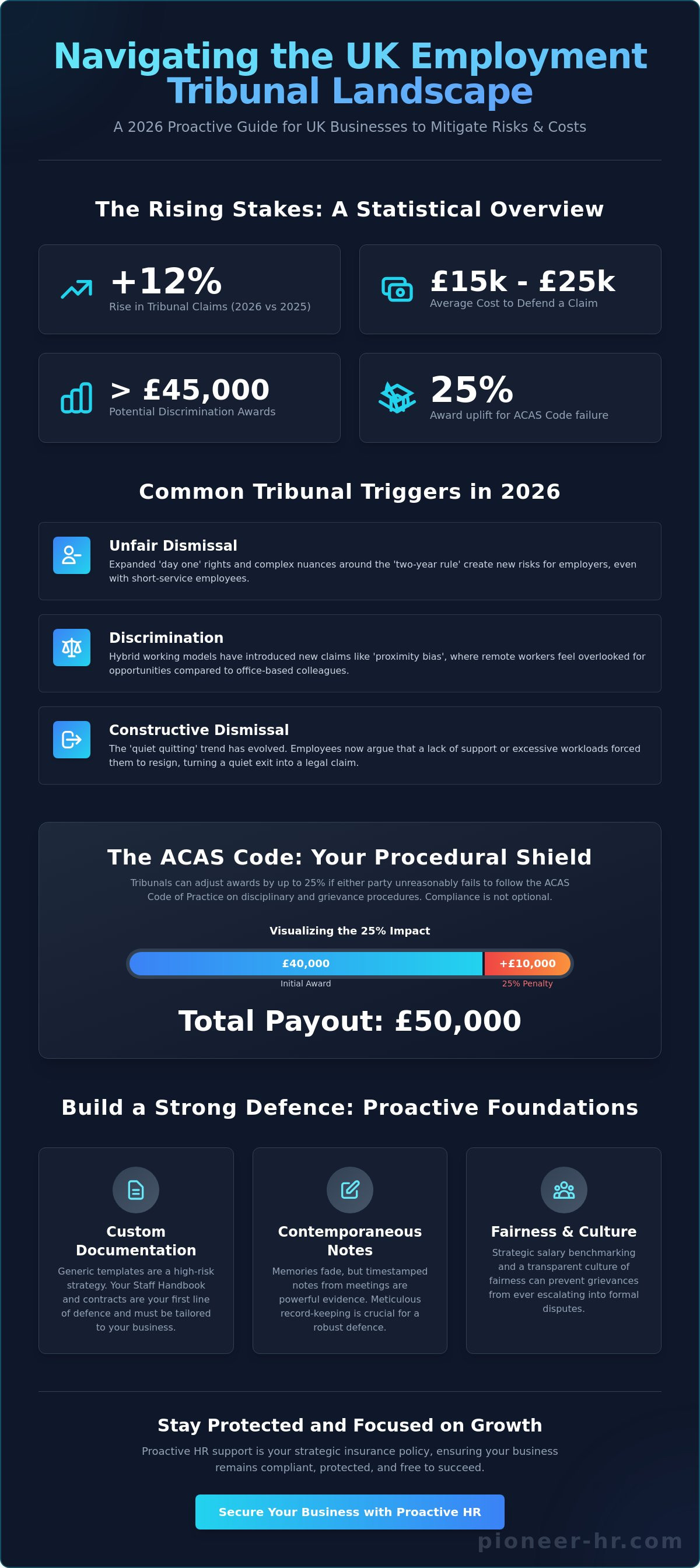
We've reached a point in 2026 where the relationship between employers and the legal system is more visible than ever. Statistics from the early half of the year show that tribunal claims have risen by 12% compared to 2025, largely due to shifting expectations around flexible work and job security. For many businesses, Employment tribunals represent a daunting hurdle that can stall growth and drain resources. We see that the current climate isn't just about whether a decision was right, but whether the path taken to get there was meticulously documented and legally sound.
Many well-meaning managers in London and Kent fall into the "intent trap." They believe that because they're acting with kindness or trying to help an employee find a better fit, they don't need to follow every rigid step of a formal process. This is a dangerous assumption in 2026. Even if your intentions are pure, a failure to adhere to procedural requirements can lead to a lost case. We've helped many partners realize that "being a good person" isn't a legal defense; being a compliant employer is. To avoid employment tribunal uk claims, you must treat every internal dispute as if it might eventually be reviewed by a judge.
The financial impact of a claim is often much higher than the final award itself. In 2026, the average cost for an employer to defend a claim through to a full hearing ranges between £15,000 and £25,000 in legal fees and management time. Beyond the money, the reputational damage can be permanent. In an era where tribunal judgments are easily searchable online, a single public loss can make it significantly harder to attract top talent in competitive hubs like London. Utilizing an HR retainer is one way we help firms stay ahead of these risks by ensuring every policy is updated in real-time.
The ACAS Code of Practice serves as the gold standard for tribunal prevention by providing the statutory framework for fair disciplinary and grievance procedures.
Common Triggers for Tribunal Claims
Unfair dismissal remains the most frequent claim, but the "two-year rule" nuances in 2026 have become more complex. While the qualifying period still exists, exceptions regarding "day one" rights for certain protected disclosures have expanded, meaning you can't always rely on a short length of service as a shield. Discrimination risks have also evolved in the hybrid workplace. We're seeing more claims regarding "proximity bias," where remote workers feel overlooked for promotions compared to their office-based colleagues. Additionally, the "quiet quitting" trend has morphed into a spike in constructive dismissal cases; employees now often claim that a lack of support or excessive workloads forced them to resign, turning a quiet exit into a loud legal battle.
The Role of the ACAS Code in 2026
Tribunals in 2026 have the power to adjust financial awards by up to 25% if either party has unreasonably failed to follow the ACAS Code. This means a £40,000 award could suddenly become £50,000 simply because a manager skipped a single meeting or failed to offer an appeal. Following the "letter of the law" isn't enough anymore; you have to demonstrate the "spirit of fairness" by showing you genuinely listened to the employee's perspective. For Sussex businesses, it's vital to stay updated on the 2026 revisions to the code, which now include more specific guidance on handling mental health disclosures during disciplinary meetings. We focus on helping you bridge the gap between basic compliance and a culture of genuine workplace justice.
The Foundations: Contracts, Policies, and Procedures
London-based scale-ups often prioritize rapid growth over administrative precision. We've seen many founders in Shoreditch or Canary Wharf rely on generic, "off-the-shelf" templates to save time. This is a high-risk strategy. Generic documents don't account for the specific nuances of your culture or the latest 2026 legislative shifts. If you want to avoid employment tribunal uk, your documentation must be as unique as your business model. We view your Staff Handbook not as a dusty PDF, but as your first line of defence. It sets the standard for professional conduct and provides the framework for every difficult conversation you might need to have.
Documentation isn't just about the rules; it's about the evidence of how you followed them. We cannot overstate the importance of contemporaneous note-taking. When a dispute reaches an independent tribunal, memories fade, but a timestamped note from a meeting in Kent three years ago remains powerful. Ministry of Justice data from 2024 indicated that procedural failings contributed to a significant portion of the £14.3 million paid out in unfair dismissal claims that year. Regular HR audits help us identify "ticking time bombs" like outdated clauses or inconsistent policy application before they explode into a legal crisis.
Iron-Clad Employment Contracts
Your contracts are the bedrock of the employment relationship. Every UK contract needs clear clauses regarding notice periods, specific job duties, and post-termination restrictions. Outdated contracts are a gift to employment solicitors; they look for any ambiguity to exploit. We've found that linking clear job descriptions to performance-related dismissal safety is vital. If a role evolves but the contract stays static, you're vulnerable. Ensuring your paperwork reflects the reality of 2026 work patterns, including hybrid arrangements, is a simple way to protect your firm. You might find that bespoke HR support is the most efficient way to keep these documents current.
Robust Disciplinary and Grievance Policies
A fair investigation is the difference between a managed exit and a costly legal defeat. You must follow a step-by-step process that mirrors the Acas Code of Practice. One common "own goal" we see is denying an employee the right to be accompanied by a colleague or trade union representative during formal meetings. Even in cases of gross misconduct, rushing the process can lead to a "wrongful dismissal" claim. You don't have to face these complexities alone. By maintaining a structured approach, you ensure that every action taken is defensible, logical, and, most importantly, fair to all parties involved. This level of preparation is the most effective way to avoid employment tribunal uk and maintain a positive employer brand.
Strategic Prevention: Why Fair Pay and Culture Matter
We've observed that most legal disputes don't actually begin with a breach of contract. They start with a feeling of being undervalued. In 2026, the psychological contract is as vital as the written one. When employees feel they're being treated unfairly compared to their peers in London or Kent, they become hyper-vigilant about other management failings. To effectively avoid employment tribunal uk claims, we must address the root cause: the "them vs. us" mentality. Transparent reward strategies and regular employee engagement surveys are our best tools for spotting friction. According to 2024 HMCTS data, single claim receipts rose by 7%, a trend that continues as employees become more aware of their rights. By using data to prove fairness, we stop grievances before they reach ACAS Early Conciliation.
The Power of Salary Benchmarking
Pay secrecy is a significant risk factor for discrimination claims. If your team doesn't understand how their pay is calculated, they'll often assume the worst. We recommend using salary benchmarking to provide an objective, data-driven foundation for your compensation packages. This proactive approach to pay benchmarking protects your business against equal pay disputes by ensuring every salary is justified by market data rather than bias. Establishing market-aligned pay structures ensures employees feel valued for their contributions, which significantly reduces the likelihood of defensive, grievance-seeking behaviour.
Training Managers to Handle Conflict
Managers are your first line of defence, yet they're often the ones who inadvertently trigger a claim. We've seen many businesses fall into the trap of the "Friday Afternoon Dismissal," a high-risk tactic where an employee is let go at the end of the week without following a fair procedure. This often leads to immediate claims for unfair dismissal because it lacks transparency and due process. Managers need a blend of soft skills and hard law knowledge to avoid employment tribunal uk pitfalls. Leadership coaching helps them handle difficult conversations with empathy, reducing the risk of harassment or bullying claims. We focus on teaching them to:
Identify the early signs of burnout or disengagement that lead to grievances.
Document performance issues accurately without using inflammatory language.
Apply company policies consistently across different teams to avoid claims of favouritism.
De-escalate heated situations before they require formal disciplinary action.
By investing in manager training, we create a culture where conflict is resolved through dialogue rather than litigation. This strategic focus on culture and fair pay ensures that your business remains a stable, productive environment for everyone involved.
Resolving Disputes Early: ACAS and Settlement Agreements
When a formal grievance lands on your desk, it's easy to feel a sense of dread. Whether you're managing a team in London or a growing business in Kent, these moments are critical. We've seen that the way you handle the first 48 hours often dictates whether the situation escalates or settles quietly. The goal is always to find a resolution before legal positions harden. Proactive communication is your best strategy to avoid employment tribunal UK claims and protect your company's reputation.
One of the most effective tools at your disposal is the "Protected Conversation" under Section 111A of the Employment Rights Act. It's a tool for transparency, not a weapon for intimidation. It allows us to have open, "off the record" discussions about ending the employment relationship by mutual consent, even if no formal dispute exists yet. This differs from "Without Prejudice" negotiations, which legally require an existing dispute to remain confidential. Using these tools correctly ensures that your offers of settlement can't be used against you as evidence of unfair dismissal later.
Mediation is another cost-effective alternative we champion. While a full tribunal hearing can easily cost an employer upwards of £10,000 in legal fees alone, mediation costs a fraction of that. It's a confidential process where an independent third party helps both sides find common ground. According to ACAS reports from 2023/24, early intervention successfully resolves a significant portion of workplace conflicts before they ever reach a judge's bench.
Early Conciliation: Your Last Best Chance
Settlement Agreements and COT3s
For a Sussex SME, a Settlement Agreement is often the "clean break" you need. You're paying for certainty. By offering a financial sum in exchange for the employee waiving their right to bring a claim, you're buying peace of mind. A COT3 is a similar resolution reached specifically through ACAS. While a COT3 is often shorter and simpler, a private Settlement Agreement allows for more bespoke clauses, such as detailed non-compete agreements or specific handover requirements. We can help you decide which path fits your specific organizational needs.
If you're facing a difficult grievance and want to explore your options for a confidential resolution, our team can provide the guidance you need. Explore our HR retainer services for ongoing support in managing workplace disputes effectively.
Peace of Mind: Proactive HR with Pioneer HR
Managing a team shouldn't feel like walking through a legal minefield. Many business owners across London and the South East only seek professional HR advice when a grievance is filed or an ACAS notification arrives. By that point, the financial and emotional damage is often already done. Reactive HR is inherently more expensive. When you're forced to hire solicitors at the last minute, you aren't just paying for legal expertise; you're paying a premium for crisis management. Costs for defending a basic unfair dismissal claim in the UK often start at £10,000 before any potential settlement is even considered.
Our retained HR support acts as a strategic insurance policy for your company. We don't wait for fires to start. We work alongside you to ensure your contracts, employee handbooks, and internal processes are robust enough to avoid employment tribunal uk risks from the outset. This proactive stance creates a stable foundation where disputes are resolved internally and professionally, long before they escalate to a courtroom. It's about shifting the focus from damage limitation to sustainable growth.
For businesses in high-growth phases, the "Fractional CPO" advantage is a game-changer. You might need the strategic vision of a Chief People Officer but aren't ready for the £150,000 annual salary a full-time executive requires. A Fractional CPO provides that high-level leadership on a flexible basis. We help you build a 2026-ready business in Kent or Sussex by aligning your people strategy with your commercial goals, ensuring you scale safely and legally.
Our Strategic Approach to HR
We believe compliance is the bare minimum, not the end goal. Our team combines reward consultancy with strict legal adherence to build workplaces where people feel valued. When employees understand their pay structures and career paths through clear job grading, the likelihood of "equal pay" or "breach of contract" claims drops significantly. We use our 30 years of experience to identify friction points in your culture. This deep expertise is your best defence against the rising tide of tribunal risks in 2026.
Next Steps for Your Business
The transition from "firefighting" to strategic people management starts with a single step. We recommend booking a comprehensive HR audit to identify your current tribunal risk level. We'll look at your existing documentation and culture to spot the "ticking time bombs" that often go unnoticed. Stop reacting to problems and start leading your team with confidence. It's time to secure your business's future with a partner who understands the local landscape.
Protect your business today with Pioneer HR’s expert consultancy.
Future-Proof Your Workplace Strategy
Navigating the complexities of UK employment law requires more than just reactive fixes. It's about building a culture where fair pay and transparent policies are the standard, not the exception. By prioritising early dispute resolution through ACAS and ensuring your contracts are updated for 2026 regulations, you'll significantly reduce risk and effectively avoid employment tribunal uk proceedings. These proactive steps don't just save you from potential legal costs; they preserve your brand's reputation in competitive markets like London and Kent.
You don't have to manage these legal shifts alone. We've spent 30+ years refining our HR expertise to support London and Sussex SMEs with tailored, compliant solutions. Our team acts as your strategic partner, providing the stability you need to focus on growth while we handle the intricate compliance details. Secure your business with a Pioneer HR Retainer to ensure your organisation remains protected and professional. Let's work together to build a resilient, people-focused workplace that stands the test of time.
Frequently Asked Questions
How much does it cost an employer if they lose an employment tribunal in the UK?
Losing a tribunal can cost your business between £5,000 and over £100,000 depending on the specific claim type. According to the 2023/24 Ministry of Justice reports, the average award for disability discrimination reached £34,731, while unfair dismissal awards are currently capped at £115,115 or one year’s gross pay. You also need to account for legal fees, which often exceed £10,000 even for relatively straightforward cases.
Can I fire an employee with less than two years of service without a tribunal risk?
You can't assume a dismissal is entirely risk-free just because an employee hasn't reached the two-year service milestone. While they generally can't claim ordinary unfair dismissal, they're protected from day one against discrimination or "automatic" unfair dismissal for reasons like whistleblowing. We've seen many Kent businesses face costly claims because they neglected a fair process for short-term staff, thinking they were fully exempt from risk.
What is the difference between unfair dismissal and wrongful dismissal?
Unfair dismissal is a statutory claim based on whether you had a fair reason and followed a proper process under the Employment Rights Act 1996. Wrongful dismissal is a contractual claim that occurs when you've breached the terms of the employment contract, such as failing to give the correct notice period. To effectively avoid employment tribunal uk proceedings, you must ensure both the legal procedure and the specific contractual obligations are met.
Is a settlement agreement a legal admission of guilt by the employer?
A settlement agreement isn't a legal admission of guilt; it's a pragmatic business tool used to resolve a dispute and ensure a clean break. These documents almost always include a "no admission of liability" clause to protect your professional reputation and brand integrity. It's a strategic way to provide financial closure for the employee while they waive their right to bring any future claims against your company.
How long do I have to respond to an ACAS Early Conciliation notification?
There isn't a strict legal deadline to respond to the initial ACAS notification, but the entire conciliation window usually lasts six weeks. If you choose not to engage, the conciliator will simply issue a certificate that allows the employee to start a formal tribunal claim. We always recommend responding within 48 hours to demonstrate you're acting in good faith and to explore if a sensible resolution is possible before costs escalate.
Can a small business in Kent manage HR without a dedicated department?
Small businesses in Kent can successfully manage their people and compliance by partnering with external strategic consultants rather than hiring a full-time team. This approach gives you access to the same high-level expertise as a major London firm but at a price point that fits a growing company's budget. It's about having a professional partner to guide you through complex moments like redundancies or performance reviews without the overhead of a permanent department.
What are the most common mistakes managers make during a disciplinary hearing?
The most frequent error is entering a hearing with a pre-determined outcome, which immediately undermines the fairness of the entire process. Managers also often forget to provide the employee with all evidence at least 48 hours before the meeting or fail to clearly offer the right to be accompanied. These procedural slips are often the primary reason an employer loses a case, even if the underlying reason for the disciplinary action was completely valid.
Do I need a lawyer or an HR consultant to avoid a tribunal?
You don't necessarily need a lawyer to avoid employment tribunal uk risks; an HR consultant is often better suited for the proactive work of prevention. While lawyers are essential for defending you once a claim is filed, a consultant works with you to build the culture and processes that stop disputes from reaching that stage. We focus on creating clear policies and training your managers so that you stay compliant and avoid the courtroom altogether.


Comments