
Salary Benchmarking Services London: A Strategic Guide for UK Employers in 2026
Updated: Jul 17
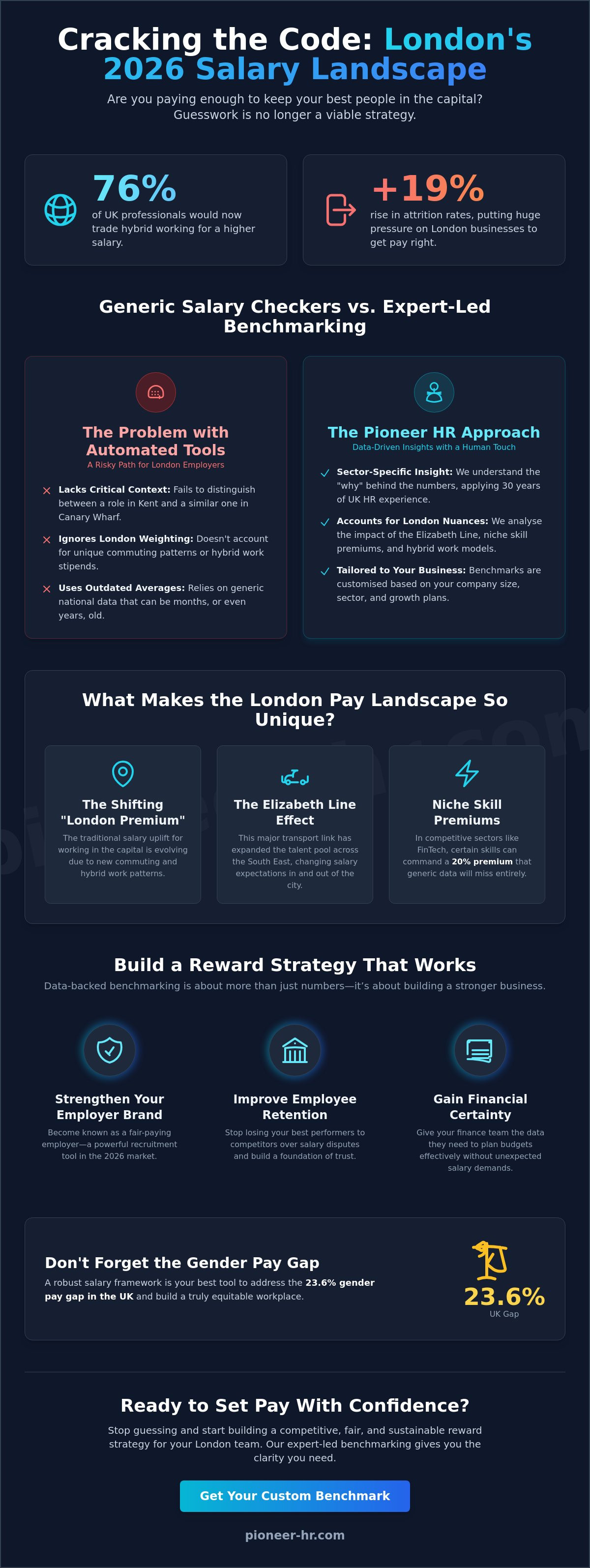
Did you know that 76% of UK professionals would trade their hybrid flexibility for a higher salary in 2026? It's a striking shift that highlights exactly how much pressure London employers are under to get their pay scales right. With attrition rates rising by 19% across the country, many businesses are finding that guessing the market rate is no longer a viable strategy. That's why professional salary benchmarking services london are becoming a cornerstone for leadership teams who want to protect their culture and their bottom line.
We understand that it's frustrating to lose your best people to competitors simply because your reward strategy hasn't kept pace with the capital's unique demands. You want to offer fair, competitive packages without overstretching your budget or relying on outdated figures. This expert-led guide provides the clear framework you need to set pay with confidence. We'll explore how to use verified market data to justify your decisions, address the 23.6% gender pay gap, and build a transparent reward strategy that actually improves employee retention.
Table of Contents
What are Salary Benchmarking Services and Why Do London Businesses Need Them?
Salary benchmarking is essentially the process of measuring your internal pay structures against the current market standards for similar roles in your industry. While it sounds straightforward, it's rarely just about matching a number on a page. In a city as fast-paced as London, where living costs and talent competition are constantly shifting, you need more than just raw data. You need context. We often see businesses relying on static reports that don't account for the specific nuances of the UK capital. Utilizing professional salary benchmarking services london allows you to move beyond simple spreadsheets and start making strategic decisions that reflect the real-world value of your team.
There's a significant difference between downloading a generic report and engaging in a consultative process. While raw data might tell you the national median for a mid-level software engineer is £69.6k, it won't explain how the Elizabeth Line has changed commuting patterns or how a specific niche skill might command a 20% premium in the City. By looking at peer benchmarking and sector-specific trends, we help you understand the "why" behind the numbers. This ensures your offers are both attractive and sustainable for your long-term growth.
The Core Benefits of Professional Pay Analysis
Getting your compensation right does more than just fill seats. It builds a foundation of trust. When your team knows they're being paid fairly based on objective market standards, your retention rates naturally improve. You stop losing top performers to competitors for the sake of a few thousand pounds. It also strengthens your employer brand. In the 2026 market, being known as a fair-paying employer is a powerful recruitment tool. Finally, it gives your finance team certainty. Data-backed planning means you won't be hit by unexpected budget requests when a key role suddenly becomes impossible to fill at your current rates.
Why 2026 is a Critical Year for UK Salary Reviews
This year is particularly challenging for UK employers. We've seen a national salary increase of 5%, which is a cooling of the market compared to last year, yet attrition rates have climbed to 18.8%. Employees are feeling the pressure of the cost-of-living crisis, and many are looking for their pay to catch up with past inflation. New UK legislation around pay transparency is also coming into play, making it harder to hide behind vague salary bands. We're seeing a massive shift toward "total reward" packages, where flexible benefits and professional development are just as vital as the base salary. Using salary benchmarking services london ensures you're navigating these 2026 complexities with precision rather than guesswork.
The Pioneer HR Approach: Data-Driven Insights vs. Generic Salary Checkers
While it's tempting to use a free online tool to check a salary range, these automated calculators often lead London employers down a risky path. In our 30 years of experience across the UK HR landscape, we've seen how generic data can inadvertently cause businesses to underpay top talent or overstretch their budgets on roles that don't justify the cost. Providing effective salary benchmarking services london requires a blend of proprietary data and human insight that an algorithm simply can't replicate. We believe that pay decisions should be based on the specific reality of your organisation, not a broad national average that fails to account for the unique pressures of the capital.
The Problem with Automated Benchmarking Tools
The biggest issue with free tools is the lack of context. A "Marketing Manager" in a small firm in Kent has vastly different responsibilities than one in a global fintech based in Canary Wharf. Automated tools often ignore these nuances, failing to account for London-specific weighting or the hybrid working stipends that became standard in 2026. They also rarely factor in company turnover or team size, which are critical when trying to find an accurate market match. While looking at government pay benchmarking can provide a useful high-level baseline for public-sector comparisons, private-sector SMEs need a more granular approach to stay competitive.
How We Customise Benchmarking for London SMEs
We take a more tailored approach by looking at your roles within the context of your specific sector and organisational structure. This starts with job grading. By evaluating the actual weight and impact of a role, we ensure we're comparing "like for like" rather than just matching job titles. Our methodology provides you with detailed reports that break down pay into quartiles and deciles. This level of precision allows you to decide exactly where you want to sit in the market, whether that's leading the pack for specialist tech roles or staying mid-market for generalist positions. If you're looking to refine your approach, our salary benchmarking services london offer the clarity needed to make these decisions with confidence. We help you move beyond the guesswork of generic tools to build a sustainable pay structure that supports your 2026 growth plans.
Navigating the London and South East Pay Landscape
The traditional "London Premium" has undergone a massive transformation as we move through 2026. While the capital has always commanded higher rates, the geographical boundaries of what constitutes a "London salary" are expanding. The Elizabeth Line and the permanence of hybrid working patterns have shifted the gravity of the South East pay market. For many employers, providing effective salary benchmarking services london now means looking far beyond the M25 to understand where their talent is actually living and what their true cost of commuting looks like. It's no longer enough to have a single "London rate" when your team might be split between the City, the suburbs, and the surrounding counties.
London vs. Kent: Understanding the Pay Differential
Businesses based in Kent are finding themselves in a unique position. They're no longer just competing with the shop next door; they're competing with the allure of a City salary that's only a short train ride away. This has led to a narrowing of the pay gap between the capital and the Home Counties. When we look at the Annual Survey of Hours and Earnings (ASHE), it's clear that while London still leads, the ripple effect across the South East is undeniable. We help our clients manage this transition by factoring in local market dynamics and commuting costs. It's about finding a balance that keeps your Kent-based roles attractive without unnecessarily matching the peak rates of Canary Wharf.
Sector-Specific Trends in the UK Capital
The 2026 landscape is particularly volatile in high-growth areas like Tech and Professional Services. For example, a mid-level software engineer in the UK now sees a national median of £69.6k, but in London, the 75th percentile can reach £80k. Specialised skills are the primary driver here, as 67% of employers report that niche expertise influences their willingness to pay more. We also have to address the elephant in the room: the UK's unadjusted gender pay gap remains at 23.6%. Our salary benchmarking services london don't just look at market averages; we help you use data to identify and close these gaps. By focusing on sector-specific quartiles, you can ensure your reward strategy remains competitive for the roles that drive your business forward.
Handling "remote-first" pay scales for a London-based company requires a clear, documented policy. Do you pay based on the employee's location or the company's headquarters? With 20% of UK workers currently unhappy with their salary because it hasn't kept pace with the cost of living, getting this right is vital for retention. We often recommend a "Pay Anchor" approach, which provides stability while allowing for regional adjustments where necessary. This ensures your team feels valued regardless of whether they're working from a desk in Soho or a home office in the Medway towns.
Integrating Market Data into a Robust Reward Strategy
Market data is a powerful tool, but it's ultimately just a collection of numbers until you apply a strategic lens. Many businesses make the mistake of treating pay as a series of isolated negotiations. Instead, we advocate for building a comprehensive reward strategy. This approach ensures every pound spent on compensation reinforces your company culture and business goals. When pay decisions are made in a vacuum, you risk creating internal friction and budget leakage. By integrating data early, you create a foundation that supports both your financial health and your people's wellbeing.
When we provide salary benchmarking services london, our goal is to help you establish "Pay Anchors". These are specific data points, such as the median or 75th percentile for your sector, that act as the foundation for your salary bands. By anchoring your pay to verified market reality, you remove the emotion and guesswork from salary discussions. This creates a level of consistency that's vital for maintaining internal equity. In a transparent 2026 market, your team likely knows what their peers are earning. Having a data-backed justification for your pay levels builds immense trust and helps you avoid the common pitfalls of reactive pay increases.
A robust strategy balances basic salary with bonuses and non-monetary benefits. While 20% of UK workers are unhappy with their current pay because it hasn't kept pace with the cost of living, money isn't the only lever you can pull. Transparency is the final piece of the puzzle. Being open about how you've used market data to set your structures shows that you value fairness. It transforms pay from a source of anxiety into a clear, shared understanding of value.
Moving from Benchmarking to Implementation
A reward strategy is a holistic approach to employee value. Once you have your anchors, you need a tiered structure. This allows for clear growth and progression, showing employees a path to higher earnings without them needing to leave for a competitor. Aligning these reviews with performance management ensures that your highest contributors are rewarded in line with the value they bring to the business. It's about creating a sustainable cycle of growth where pay increases are earned and celebrated.
The Role of Non-Financial Rewards
London SMEs often struggle to match the base salaries offered by global corporate giants. However, you can compete by offering high-value non-financial rewards. Flexible working, enhanced health benefits, and professional development opportunities are seen as significant parts of the "total pay" package. In 2026, 76% of professionals are willing to return to the office full-time for more money, but many would stay for a better work-life balance. Using salary benchmarking services uk allows you to validate whether your total package, including these perks, actually stands up against the competition.
If you're ready to move beyond spreadsheets and build a compensation plan that truly works, we can help. Explore our reward strategy services to start building a fairer, more competitive future for your team.
Choosing the Right Partner for Salary Benchmarking in London
Finding the right partner is about more than just buying a report. It's about finding a strategic ally who understands that pay is the heartbeat of your organisational culture. While many competitors offer fast, automated reports, they often lack the personal touch required to translate data into action. This is where an external, objective perspective becomes invaluable. By stepping outside your internal bubble, we can identify biases and market misalignments that are often invisible from the inside. Our salary benchmarking services london are designed to provide this clarity, helping you build a structure that is both fair and sustainable.
One of the biggest advantages we offer is the expertise of a Fractional Chief People Officer. Unlike a standard consultant, a Fractional CPO brings board-level experience to your pay reviews, ensuring your reward strategy aligns with your long-term business goals. This is a level of strategic oversight that software-driven competitors simply can't match. Whether you're a scaling tech firm in Soho or an established professional services business in Kent, having this high-level guidance ensures your compensation decisions are robust enough to withstand the pressures of the 2026 market.
Why Pioneer HR is the Strategic Choice for SMEs
Our team combines 30 years of deep-seated expertise with a modern, conversational approach that resonates with today's SMEs. We aren't just looking at the UK as a whole; we're focused on the specific interplay between London, Kent, and the wider South East market. We've helped numerous UK businesses move from reactive pay hikes to structured, transparent reward systems. Our Retained HR Support ensures that once your new pay structure is in place, you have the ongoing guidance needed to maintain it as the market evolves and new talent challenges emerge.
Next Steps: Securing Your 2026 Pay Structure
Securing your 2026 pay structure starts with an audit of your current internal data. You'll need to gather your existing job descriptions and pay scales to ensure we can conduct a thorough, like-for-like comparison. A comprehensive salary review project typically takes between four to six weeks, depending on the complexity of your organisation and the number of roles being analysed. This timeline allows for the depth of research and consultation required to get the results right. If you're ready to start, we invite you to contact Sarah-Jane (SJ) and the team for a bespoke salary benchmarking quote. We'll work closely with you to understand your unique challenges and provide a clear roadmap for a more competitive future.
Secure Your Competitive Edge in the Capital
We've explored how the London and South East markets are shifting, moving from simple pay scales to complex total reward strategies. By moving away from inaccurate online checkers and focusing on data-backed job grading, you can protect your culture and your budget. Our approach ensures your business stays competitive without the guesswork that often leads to talent loss. Implementing professional salary benchmarking services london is the most effective way to gain this clarity.
With over 30 years of HR leadership experience, we specialise in helping SMEs across London and Kent navigate these challenges. By incorporating Fractional CPO strategic oversight, we help you build a compensation framework that truly reflects your values and supports your 2026 growth. We're here to help you turn market data into a powerful retention tool that your team will trust and value.
Get a bespoke quote for our London Salary Benchmarking Services
We look forward to partnering with you to create a fairer, more rewarding workplace for your team.
Frequently Asked Questions
How often should a London business benchmark its salaries?
Most London businesses should conduct a full salary review at least once a year. The capital's market is highly volatile, so waiting longer can leave you vulnerable to talent poaching. If you're in a high-growth sector like tech or professional services, a bi-annual pulse check on key roles is often safer to ensure your packages haven't fallen behind the 2026 market rates.
What is the difference between a salary survey and salary benchmarking?
A salary survey is a broad collection of raw data across various industries and regions. In contrast, benchmarking is the strategic process of comparing your specific roles against a curated peer group. While surveys provide the high-level numbers, benchmarking adds the necessary context of job responsibilities, company size, and specific London location to ensure accuracy.
Does salary benchmarking include benefits and bonuses?
Comprehensive salary benchmarking services london always look at the "total reward" package. This includes base pay, performance bonuses, and non-monetary benefits like private medical insurance or hybrid working stipends. We believe that focusing only on the basic salary gives an incomplete picture of your competitiveness, especially as employee expectations around holistic support continue to evolve.
Can salary benchmarking help with the Gender Pay Gap report?
Benchmarking is a vital tool for addressing the UK's 23.6% unadjusted gender pay gap. By using objective market data to set pay for specific job grades, you remove the risk of individual bias during salary negotiations. This creates a transparent structure that makes it much easier to justify pay decisions and demonstrate genuine progress in your annual reporting.
How much do salary benchmarking services in London typically cost?
The cost of benchmarking depends entirely on the number of roles being analysed and the depth of the sector-specific data required. While generic online reports might seem cost-effective, they lack the precision needed for the unique London and Kent markets. Most professional consultancies provide bespoke quotes based on the specific scope of your organisational audit and your long-term growth goals.
Is it better to use a recruitment agency or an HR consultancy for benchmarking?
While HR consultancies focus on long-term reward structures, recruitment agencies provide real-time insight into what candidates are currently demanding. If you are hiring in high-growth sectors, it can be beneficial to discover TrustTech Recruitment, a specialist agency providing contract and permanent staffing solutions for the technology and marketing industries.
What data sources are used for UK salary benchmarking in 2026?
Reliable benchmarking in 2026 relies on a blend of official government publications and live market intelligence. We look at the Annual Survey of Hours and Earnings (ASHE) alongside 2026 salary data from major UK platforms like Reed and Randstad. This is then layered with proprietary data to provide a realistic view of what employers in the South East are actually paying.
How do we handle pay for employees who work remotely from outside London?
Many businesses now use a "Pay Anchor" approach for remote teams to ensure consistency. This involves setting a base rate that might be adjusted slightly based on the employee's primary location, such as Kent versus Central London. It's important to have a clear, documented policy that explains these regional differences so your team feels treated fairly regardless of their home postcode.


Comments