
Employee Retention Strategies for London SMEs: A 2026 Strategic Guide
Updated: Jul 18
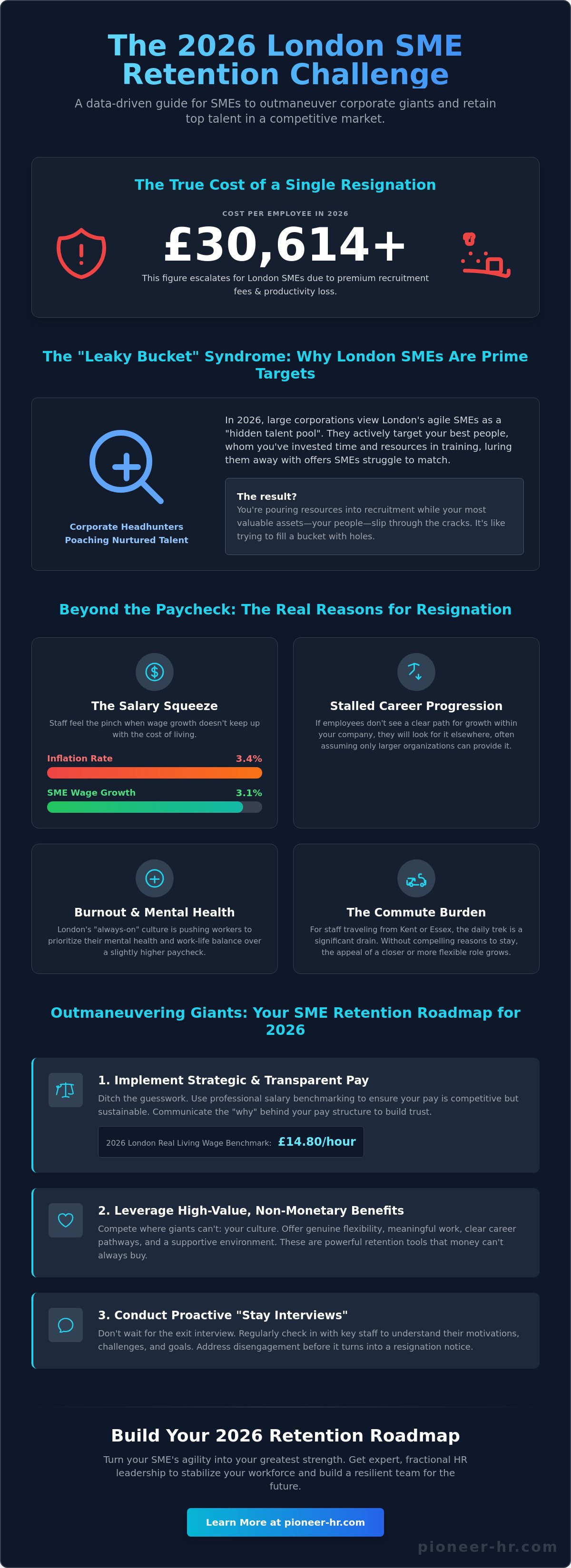
Did you know that losing just one key team member in 2026 can cost your London business upwards of £30,614 in recruitment fees and lost productivity? It's a staggering figure that makes finding effective employee retention strategies for london smes more than just an HR goal; it's a financial necessity. We understand the frustration of watching talent you've nurtured get lured away by the massive salary packages offered in The City or by global tech firms. It often feels like the rules are stacked against you.
We're here to tell you that retention isn't just about who has the biggest budget. In fact, being an agile SME in Kent or London gives you a distinct advantage that corporate giants simply can't match. This guide will show you how to outmanoeuvre larger competitors by using data-driven insights and authentic engagement. You'll discover how to create a clear framework for rewards that keeps your top talent loyal without breaking the bank.
We will break down the latest 2026 benchmarks, including the £14.80 London Real Living Wage and the new day one rights under the Employment Rights Act. You'll learn how to tackle the "job-hugging" trend and use "stay interviews" to address disengagement before it leads to a resignation. You'll gain a strategic roadmap to reduce recruitment spend and build a resilient team.
Table of Contents
The 2026 London SME Retention Challenge: Why Staff Leave
We've all felt that sinking feeling when a talented team member asks for a "quick chat" on a Friday afternoon. You spend months nurturing a brilliant junior manager in your Southwark office, only for a corporate giant in Canary Wharf to swoop in with a shiny benefits package and a 20% pay rise. In 2026, London SMEs have become the primary "hidden talent pool" for corporate headhunters. This poaching phenomenon is exhausting, but it's also a sign that you're hiring the right people. The real issue is that your HR processes might be suffering from a "leaky bucket" syndrome; you're pouring resources into recruitment while your best talent slips through the cracks of your daily culture.
The 2026 shift in UK worker values means that basic perks no longer guarantee loyalty. Employees are looking for a deeper sense of alignment and stability. If your business lacks a clear, data-driven approach to keeping people, you're essentially training your staff for your competitors. To stop this drain, we need to look at employee retention strategies for london smes that address the specific pressures of working in the capital.
The True Cost of a Resignation in London
While industry reports often estimate the average cost of turnover at around £30,614, the reality for London-based firms is usually much higher. You have to account for the premium on London recruitment fees, the high cost of office space while a seat sits empty, and the "cultural tax" paid by the remaining staff who must pick up the slack. In a small team, losing one key person is often three times more damaging than in a large firm because there's no "bench" of talent to step in. Employee retention isn't just a HR metric; it's the most profitable investment an SME can make in 2026. Maintaining a stable workforce allows you to focus on growth rather than constant firefighting.
Why Londoners Quit: Beyond the Salary
It's tempting to think it's always about the money, but the reasons people leave are often more personal. The "always-on" London culture has pushed many toward burnout, making them prioritise mental health over a slightly higher paycheck. For your staff commuting from Kent or Essex, the daily trek into the capital is a significant burden. If they don't see a clear path for career progression within your business, that long commute starts to feel like a waste of time. They'll look for a larger organisation simply because they believe that's the only place they can grow. Effective employee retention strategies for london smes must focus on creating that growth internally, ensuring your team feels valued and challenged right where they are.
Strategic Salary Benchmarking: Staying Competitive in the Capital
We've often seen London business owners rely on "gut feeling" or outdated recruitment ads to set their salaries. In a city where the voluntary Real Living Wage reached £14.80 per hour in April 2026, guessing isn't just risky; it's a fast track to losing your best people. If you're underpaying by even a small margin, your staff will notice, especially when SME wage growth of 3.1% is currently being outpaced by a 3.4% inflation rate. On the flip side, overcompensating out of fear can quickly cripple your margins. Professional salary benchmarking services uk provide the clarity you need to stay competitive without overstretching your financial resources.
Transparency has become a non-negotiable requirement for building trust in 2026. UK employees now expect clear communication about how their pay is determined and how it compares to the wider market. When you provide a transparent framework, you build a level of loyalty that corporate giants often struggle to replicate with their rigid, impersonal systems. Integrating Effective Employee Retention Strategies into your compensation model means showing your team exactly how their contribution maps to their pay. This is one of the most effective employee retention strategies for london smes because it removes the "black box" of salary negotiations and replaces it with professional certainty.
The Art of Pay Benchmarking
We believe in moving beyond generic UK averages. A role in Kent requires a different approach than a role in Shoreditch, particularly with tech sector base salaries seeing a 7.5% year-on-year growth. You should use salary benchmarking to ensure your roles are priced correctly for the specific London micro-market you operate in. This data allows you to handle pay reviews with confidence, even when the economic landscape feels volatile. If you're unsure where your current scales sit, we can help you audit your existing pay structures to identify any immediate risks.
Job Grading and Fair Pay Structures
Internal resentment often grows when two people doing similar work are on vastly different pay scales. Implementing clear job grading prevents this "salary creep" and ensures that pay rises are earned through performance rather than just time served. It creates a fair playing field that rewards your high achievers and provides a logical path for career progression. Benchmarking protects SMEs from overpaying while ensuring they don't underpay, keeping your workforce stable and your finances healthy. This structured approach is a cornerstone of successful employee retention strategies for london smes in a competitive 2026 market.
The Reward Strategy: Non-Monetary Levers for Retention
While salary keeps your people in the game, it's the non-monetary elements that keep them in their seats. Large corporate firms in Canary Wharf or the City often have massive budgets, but they struggle with the agility required to offer truly personalised rewards. As a smaller business, your advantage lies in your ability to listen and adapt quickly. Designing a reward strategy that focuses on the human element is one of the most powerful employee retention strategies for london smes. It's about creating a culture where people feel seen, not just processed through a spreadsheet.
In 2026, 53% of UK employees who change jobs do so in search of better company benefits. This suggests that once a fair salary is established, the "extra" factors become the deciding ones. We've found that a "Recognition Culture" is particularly effective in small, agile teams. A simple, public acknowledgement of a job well done often carries more weight than a generic corporate bonus. It's about building a sense of belonging that big corporations simply can't replicate. When your team feels that their specific contributions are noticed and valued, their loyalty to the business deepens naturally.
Flexible Working as a Retention Powerhouse
Flexibility in 2026 has evolved far beyond a simple "work from home" policy. For your staff commuting from Kent or Essex, the daily trek into Central London is a major source of stress. Offering flexible start times to avoid the 8 AM rush on Southeastern or Greater Anglia services can be a life-changing benefit. Some London SMEs are even exploring 4-day weeks to give their teams more time for life outside of work. The key is to manage the "London-Suburban" divide by tailoring rewards to individual needs. This level of care is a non-negotiable for keeping top talent in the capital's competitive market.
Wellbeing and Professional Development
Investing in your team's mental and professional health is a high-impact, low-cost way to boost retention. Employee Assistance Programmes (EAPs) provide vital support that shows you care about your staff as people, not just workers. Equally important is leadership development. Since the quality of a direct manager accounts for up to 70% of the variance in team engagement, management training is actually a reward for the entire department. We encourage you to explore our reward consultancy services to build a strategy that aligns your business goals with your team's personal growth. This holistic approach ensures your employee retention strategies for london smes are robust and future-proof.
The Strategic HR Advantage: Fractional Leadership for SMEs
We've noticed a common pattern among growing firms in London and Kent. Many business owners treat HR as a purely administrative function, focusing on contracts and payroll while neglecting the strategic side of people management. This lack of a "strategic voice" at the boardroom table is often why even the most well-meaning employee retention strategies for london smes fail to gain traction. Without executive-level oversight, you're often left reacting to resignations rather than preventing them. The challenge is that most SMEs simply don't have the budget for a full-time Chief People Officer (CPO), whose salary in the capital can easily exceed £150,000.
This is where the rise of the fractional Chief People Officer has changed the game. It allows you to access the same high-level expertise as a FTSE 100 firm but on a part-time basis that fits your specific scale and budget. By bringing in a seasoned professional for just a few days a month, you can conduct a thorough HR audit to identify the exact gaps causing your staff to leave. Whether it's a breakdown in management communication or a reward structure that has fallen behind the market, a fractional leader provides the clarity needed to fix the "leaky bucket" for good.
Implementing a Fractional CPO Model
We recommend a three-step approach to integrating strategic leadership into your business. First, identify the strategic gaps in your current engagement and retention plans by looking at turnover data and exit interview themes. Second, bring in executive-level expertise for 2 to 4 days a month to steer the ship and mentor your existing team. Finally, align your people strategy with your 2026 business growth goals. This ensures that every hire and every retention initiative directly supports your bottom line. It's a scalable way to build a world-class culture without the corporate overhead.
Retained HR Support vs. Ad-hoc Advice
While ad-hoc advice helps with immediate crises, retained HR support is the foundation of proactive retention. Ongoing support allows us to spot "toxic" culture issues or management friction before they lead to a wave of resignations. In the fast-paced London market, staying compliant with the latest 2026 UK employment laws is just the baseline. The real value lies in building a modern workplace culture where people actually want to stay. If you're ready to move from reactive hiring to proactive growth, our Fractional CPO services can provide the leadership your team deserves.
Building Your 2026 Retention Roadmap with Pioneer HR
We've explored the financial risks and the cultural shifts defining the current market, but the most important takeaway is this: your size is your greatest strength. While corporate giants in the City rely on rigid structures, you have the agility to pivot and the personal connection to make every team member feel indispensable. Successful employee retention strategies for london smes aren't built on imitation; they're built on the unique culture you've already created. At Pioneer HR, we've spent 30 years helping businesses across London and Kent turn that culture into a measurable competitive advantage.
The 2026 labour market doesn't reward a "wait and see" approach. With the average cost to replace a specialist role often exceeding £30,614, the time to pivot from recruitment-heavy to retention-first thinking is right now. By the time an employee hands in their notice, the opportunity to influence their decision has usually passed. We believe in being proactive, using data to identify disengagement before it turns into a resignation. Whether it's through stay interviews or strategic salary adjustments, we help you build a roadmap that keeps your top talent loyal for the long term.
Custom Solutions for London and Kent Businesses
We don't believe in one-size-fits-all HR. A creative agency in Shoreditch faces different retention pressures than a manufacturing firm in Kent, and your reward strategy should reflect that. We tailor our benchmarking and engagement tools to your specific London borough and industry sector, ensuring you're comparing your business to the right rivals. Local expertise is vital in the UK's complex HR landscape, especially with the recent 2026 changes to Statutory Sick Pay and parental leave rights. We invite you to join us for a diagnostic call to assess your current turnover rate and identify the quick wins that can stabilise your team immediately.
Start Your Retention Journey Today
If you're unsure where to begin, we recommend a quick "retention health check" for your business. Ask yourself these three questions: Have we benchmarked our salaries against the 2026 London Real Living Wage of £14.80? Do our managers have the training to handle the 70% variance they cause in team engagement? Is our flexibility policy actually meeting the needs of our commuters? If the answer to any of these is "no" or "I'm not sure," it's time to take action. You can reach out to Sarah-Jane and the team today to begin a strategic HR audit that protects your most valuable asset: your people. Book a consultation with Pioneer HR to fix your retention issues and build a stable, high-performing workforce for the years ahead.
Transforming Your Team into Your Greatest Asset
The 2026 London market demands more than just a competitive salary. It requires a strategic alignment of fair pay, authentic culture, and expert leadership. By moving away from guessing and toward market-verified data, you can stop the "leaky bucket" of turnover that often drains SME profits. Effective employee retention strategies for london smes rely on the agility that only smaller businesses can offer. Whether you're based in Kent or Central London, you have the power to create a workplace that outshines corporate giants.
With our 30+ years of HR expertise, bespoke London-market salary data, and fractional CPO leadership, we help you build that foundation. It's about more than just filling gaps; it's about creating an environment where your people feel truly valued. This strategic shift will reduce your recruitment spend and foster a stable, loyal workforce that is ready for future growth. We're here to ensure your people strategy is as ambitious as your business goals.
Secure your top talent today with Pioneer HR’s strategic support. We look forward to helping you build a loyal, high-performing team that carries your business forward with confidence.
Frequently Asked Questions
What is a good employee retention rate for a London SME in 2026?
A retention rate above 85% is generally considered the gold standard for healthy UK businesses. While the national turnover rate often sits around 35% annually, maintaining a higher stability within your team protects you from the significant costs of recruitment and lost knowledge. You should track your regrettable turnover specifically to ensure your top performers aren't the ones leaving for competitors in the City.
How much does it cost to benchmark salaries for a small UK business?
Professional salary benchmarking is usually included within retained HR support, which typically costs between £100 and £500 per month for most SMEs. If you prefer a one-off project, expert consultants often charge hourly rates between £60 and £150. This investment ensures your pay scales are accurate for the London market, preventing you from overpaying or losing talent due to underpayment.
Can a 4-day work week really improve retention in the London tech sector?
Moving to a 4-day work week has become a powerful tool for tech firms where base salaries are growing at 7.5% year-on-year. For many specialists, the gift of time is more valuable than a marginal pay rise that might be swallowed by inflation. It's a strategic move that helps you stand out from larger corporations that often lack the agility to implement such flexible models.
What are the most valued non-monetary benefits for staff in London and Kent?
Flexible working arrangements and clear paths for professional development are currently the most prized benefits for employees in the South East. Health insurance and mental health support have also become essential as workers look for security beyond their monthly paycheck, which can be supported by offering resources for financial fluidity like I Need Cash. These elements are vital employee retention strategies for london smes because they address the specific pressures of living and working in or near the capital.
Is it better to hire a full-time HR manager or use a fractional CPO?
A fractional CPO is often the better choice for growing businesses that need strategic leadership without the £150,000 plus salary of a full-time executive. While a manager handles daily admin, a fractional leader provides the high-level expertise needed to fix cultural issues and build long-term people strategies. This model gives you executive-level guidance for just a few days a month, which is far more cost-effective for most SMEs.
How does the 'London Living Wage' impact SME retention strategies?
The voluntary Real Living Wage of £14.80 per hour is a critical benchmark for building trust and loyalty within your workforce. Paying this rate shows your team that you respect the actual cost of living in the capital, which is a foundational part of effective employee retention strategies for london smes. It helps reduce the "job-hopping" trend by providing a fair baseline that makes staff feel valued from day one.
What happens if I can't afford to give pay rises this year?
If budgets are tight, you should focus on radical transparency and enhancing your non-monetary rewards. Be honest with your team about the business climate and look for low-cost ways to improve their working lives, such as extra holiday days or increased flexibility. Many employees will stay if they feel their career is progressing and their wellbeing is prioritised, even if a salary bump isn't immediately possible.
How do I deal with a competitor poaching my staff in London?
The best way to stop poaching is to conduct regular "stay interviews" to understand what motivates your team before a headhunter calls. Since manager quality accounts for 70% of team engagement, investing in leadership training is your strongest defence against external offers. Focus on the personal connection and unique culture of your SME, as these are the things a large corporate firm can't easily replicate.


Comments