
Retained HR Services for Small Businesses in the UK
The right HR support for a small business isn’t always a full-time hire. Retained HR services suit UK businesses that need ongoing advice and practical support, while a company with an isolated issue may need a different kind of help. Getting the most from retained HR services starts with agreeing your priorities and how support will fit into day-to-day work.
It’s reasonable to want clear value from ongoing HR support, especially when managers are balancing people issues with the demands of running a business. The key is to match the service to your priorities and agree how it will work with your team.
This guide explains who retained HR support is for, what it can cover, and how to integrate it with managers and existing workflows. It also sets out what to consider before deciding whether ongoing support is right for your business in London, Kent or elsewhere in the UK.
Table of Contents
Helping managers put HR advice into practice
Set up a straightforward workflow for people issues. Name a main contact, agree how managers will share information, and clarify who makes decisions internally. For example, a manager dealing with an absence concern can record key dates, gather relevant documents and send a concise summary before speaking with HR. That gives the adviser useful context and helps turn guidance into clear next steps. Review the process when responsibilities or team structures change.
Agree service levels in writing, including response times, support hours and whether managers can contact the consultant by email or phone. The retainer may include scheduled office visits or access to a helpline, depending on its agreed scope. Set expectations for routine questions and urgent cases separately, and identify what happens when the usual contact is unavailable. There’s no universal response time or support schedule: the agreement should reflect your operational needs.
Clarify what ongoing HR support will cover before relying on it. Pioneer HR’s Retained HR Services include ongoing support with employee relations, HR compliance, policies, performance management and day-to-day people issues. For a grievance, for example, agree who will gather the information, who will advise on next steps and who will make decisions. Keep a secure record of advice, decisions, dates and actions, and assign each action to a manager or HR contact.
One-off HR advice may be sufficient when an issue is isolated and your managers can handle routine processes. Before requesting it, establish whether the fee covers an initial conversation, written advice, document preparation or support throughout the process. Retained HR support has different limitations: work outside the agreed scope may require separate arrangements, and external advice cannot replace timely decisions or accurate information from managers. To get the most from retained HR services, share your workflows and organisational priorities early, then review recurring questions with the consultant. This helps the HR function spot patterns, rather than treating each case as unrelated.
Is an HR Retainer Worth It for a Small Business?
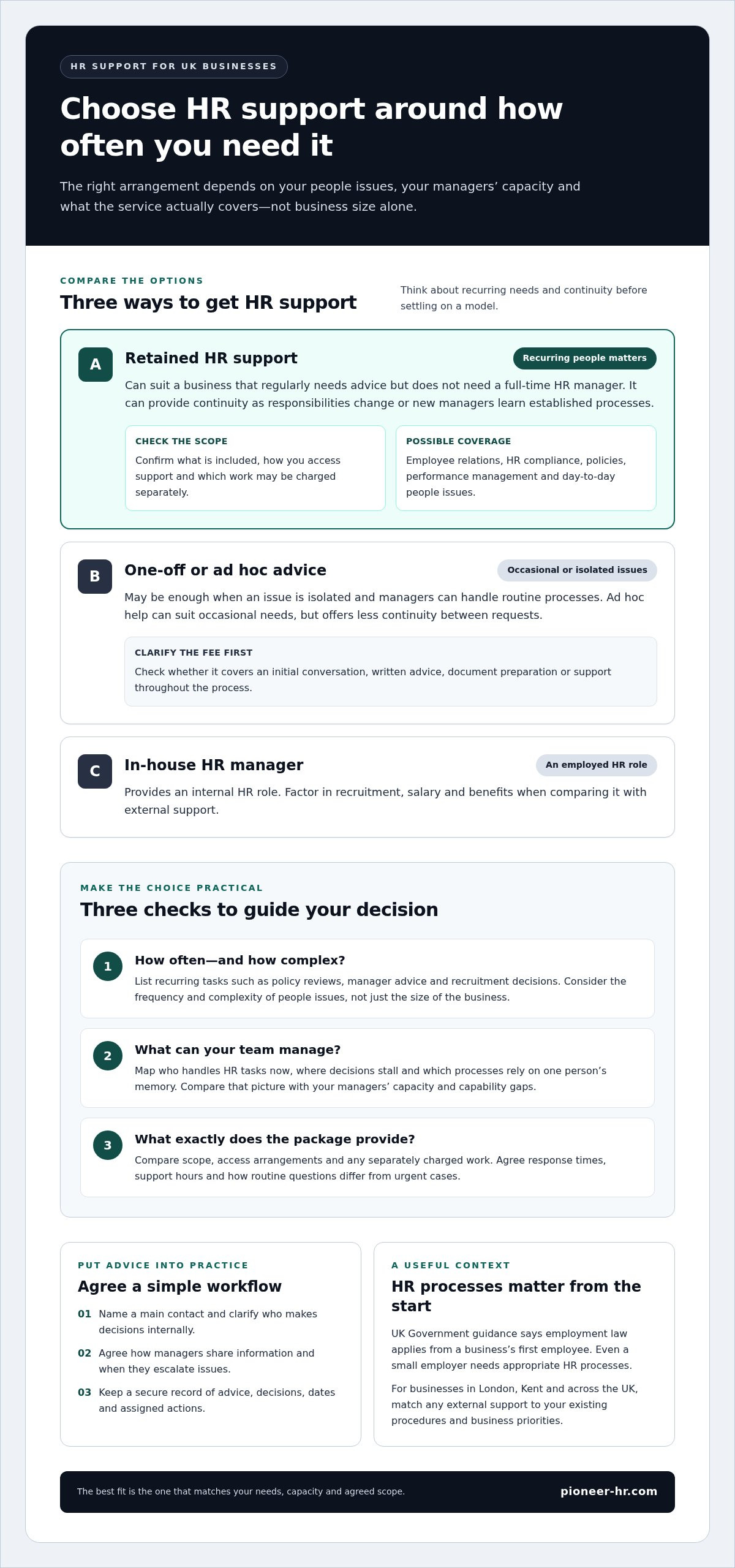
A retainer can suit a business with recurring people matters but no need for a full-time HR manager. The decision depends on how often support is needed and what the arrangement covers.
Matching Packages to Business Needs
Start by listing recurring tasks, such as reviewing policies, advising managers or supporting recruitment decisions. Then compare packages by scope, access arrangements and any work charged separately. A suitable provider should explain how its approach fits your industry, demonstrate a relevant track record and understand your values. These points help you judge whether the relationship can support both day-to-day decisions and strategic priorities.
Small Business Value and Suitability
Retained HR support may be useful when managers regularly face employee questions, grievances or changing team needs. It can also provide continuity as responsibilities change or new managers learn established processes. A business with only rare, straightforward queries may need a different level of support. Size alone doesn’t determine suitability: consider the frequency and complexity of people issues, as well as your internal capacity to manage them.
Compare the retainer’s likely use with the separate work you expect to need; it isn’t automatically cheaper than one-off advice. An in-house HR manager involves recruitment, salary and benefits, while an external retainer provides access to HR support as needed. Ad hoc consultants can suit occasional issues, but offer less continuity between requests.
Check whether the package includes regular reviews of your employee handbook and workplace practices. UK Government guidance says employment law applies from a business’s first employee, so even a small employer needs appropriate HR processes. Ask how reviews are handled and how recommendations connect with your existing procedures.
For a closer look at ongoing HR arrangements, explore retained HR support options.
Assessing HR needs and capability gaps
Before arranging ongoing HR support, map the work your managers handle today. List recurring matters, who owns them, and where decisions stall. For example, record how absence is reported, who reviews patterns, and how employee relations concerns reach senior managers. This turns a broad request for help into a practical picture of your current HR function.
Use existing records to identify pressure points. Review absence information, grievance outcomes, employee turnover patterns and recruitment processes, while protecting confidential details. Note which tasks follow clear procedures and which depend on one manager’s memory. A small business may find that onboarding is consistent, but performance conversations happen only after problems arise. That contrast can reveal a capability gap to address.
Next, agree what your HR support should help achieve. Choose priorities such as clearer guidance for managers, consistent documentation or earlier attention to recurring absence. Give each priority an owner and a practical way to review progress. For instance, managers could record whether agreed check-ins take place and whether actions from a grievance are completed. This keeps discussions focused on outcomes, not activity alone.
Bring key stakeholders into the assessment. Ask managers where they lose time, and invite employees to share feedback through appropriate channels. Compare their views with documented cases, since a process that looks complete on paper may be difficult to use in practice. A monthly review can help identify new matters, changing workloads and patterns that need attention.
Use your findings to shape the working relationship. Share your organisational structure, existing policies, decision-making routes and business objectives with your HR partner. A growing team may need support with manager capability, while a stable workforce may prioritise consistent employee relations processes. Revisit priorities as the business changes, rather than treating the initial assessment as permanent.
Keep: a record of recurring issues and existing procedures.
Identify: gaps in ownership, skills or documentation.
Prioritise: the outcomes that matter to managers and employees.
Review: progress and new needs during monthly discussions.
Contract commitment and notice period
Before agreeing outsourced HR, read the contract for its length, renewal terms and notice period. Also compare the stated response times and support hours with the needs managers raised during planning. A business handling regular employee matters may need different access arrangements from one seeking occasional advice. Record these terms in a central contract file so the people responsible can find them.
Review the scope carefully. Check which advice, policy support and employee relations work are included, then identify any separate projects. For example, clarify whether policy updates are part of the ongoing support or need to be planned as a project. Clear responsibilities help managers understand what to expect when a grievance or workplace change needs attention.
A monthly rolling contract can provide a regular point to discuss changing needs. Use that review to compare the agreed support with actual requests, recurring issues and business priorities. If recruitment increases or managers need more guidance, document the change and discuss whether the scope or access arrangements should adapt. Keep decisions in writing, including any revised terms and the date they take effect.
To review and renegotiate a retained HR contract, compare its current scope, response times, contract length, renewal terms and notice period against your recorded needs. Then discuss specific changes, such as clearer support boundaries or more flexible arrangements, and document any agreed amendments before relying on them.
Pay particular attention to renewal and notice wording before a renewal date. Note who must give notice, how it must be delivered, and whether the contract describes a renewal process. These details affect how you plan a transition or continue the relationship. Don’t assume a conversation alone changes written terms; keep a record of formal changes and the revised agreement.
For a practical discussion about retained HR support arrangements, review how the agreed scope can reflect your business’s current priorities.
Include clearly stated response times and support hours that match the needs managers identified during planning. Set access arrangements according to how often the business expects to need help, and clarify which advice, policy reviews and case support are included and how work outside the scope is handled.
Pioneer HR: Retained HR Support
Pioneer HR provides Retained HR Support for UK businesses that need ongoing, practical HR guidance alongside their managers. It can help employers address recurring people matters and build a consistent approach as their teams and priorities change.
Where your needs extend beyond day-to-day support, Pioneer HR’s Salary Benchmarking and Reward Strategy can inform decisions about pay and benefits. A Fractional Chief People Officer can provide strategic, board-level people leadership on a part-time basis. The right starting point depends on your current challenges, internal capability and business objectives.
If you’ve identified a need for ongoing HR support, visit pioneer-hr.com to learn more about working with Pioneer HR.
Make your next HR decision a deliberate one
The next step is to turn your people priorities into a practical plan that can evolve with your business. As teams change, revisit whether your approach still supports managers, employee experience and longer-term organisational goals. That ongoing reflection is central to getting the most from retained HR services, because it keeps support connected to real business needs.
Pioneer HR offers Retained HR Support, with Salary Benchmarking and Reward Strategy available to support related people decisions. If you’re considering how these areas fit your organisation, a conversation can help you explore the right focus for your circumstances.
Contact Pioneer HR to discuss support and take a considered next step for your people strategy.
Frequently Asked Questions
Who Is Retained HR Support For?
Retained HR support can suit UK employers who need continuing people expertise but don’t require a full-time HR role. For example, a growing business with several managers may want consistent guidance as responsibilities expand. It can also complement an existing HR function when a particular project or specialist area needs additional input. Employers with only rare, straightforward queries may find occasional advice more appropriate.
What are Retained HR Services?
Retained HR services provide ongoing external support for an employer’s people-related work, rather than help with just one issue. The business agrees how the consultancy will support its people function and how managers will access that expertise. For example, ongoing support can help maintain a consistent approach while responsibilities shift between managers or teams.
What is included in a retained HR package?
The scope of support should reflect your business needs. Pioneer HR’s Retained HR Services cover ongoing HR support, employee relations, HR compliance, policies, performance management and day-to-day people issues. Before starting, match the support to real business tasks, such as helping managers prepare for performance conversations. Also distinguish ongoing support from separate projects, so responsibilities are clear.
Can you work with the person who handles HR internally?
Pioneer HR works with internal HR teams, acting as a second pair of eyes, delivering overdue projects, and providing strategic backup in reward, training, and employee relations. For example, an internal HR lead can retain ownership of routine processes while getting additional expertise for a complex project. Agree decision-making roles early, so managers know who leads each action.
How Does an HR Retainer Work in Practice?
Retained HR support establishes an ongoing working relationship, with support shaped around your needs. A manager might raise a query about a proposed change, share relevant context, then use the HR partner’s advice to plan next steps. Regular conversations can also identify recurring themes. Clear records of decisions and responsibilities help the business apply advice consistently.
What are retained HR services and what do they include in the UK?
In the UK, retained HR services provide ongoing external support for an employer’s people-related work. Pioneer HR’s Retained HR Services cover HR advice, employee relations, HR compliance, policies, performance management and day-to-day people matters. Clear responsibilities help businesses understand how the support fits alongside managers and their existing processes.



Comments