
Managing Long-Term Sickness: 2026 Guide for UK Employers
- Pioneer HR
- 11 hours ago
- 11 min read
What if the most effective way to protect your business from a disability discrimination claim isn't a rigid legal checklist, but a genuine conversation? We understand that managing long term sickness absence uk can feel like walking a tightrope. With the 2026 changes to Statutory Sick Pay now in full effect, including the removal of waiting days and the lower earnings limit, the administrative and financial weight on employers has never felt heavier. Whether you are based in the heart of London or managing a local team in Kent, the fear of getting a sensitive capability meeting wrong is a common anxiety for even the most experienced leaders.
We're here to help you master the delicate balance between strict legal compliance and compassionate leadership. By the end of this guide, you'll have a clear roadmap to reduce absence costs and foster successful return-to-work outcomes for your valued staff. We will walk you through the essential updates from the Employment Rights Act 2025, explain how to maintain professional contact without overstepping, and show you how a strategic approach to health can actually strengthen your team's long-term resilience.
Table of Contents
Defining Long-Term Sickness Absence in the 2026 UK Workplace
In the UK, the line between a short-term bout of flu and a long-term health issue is usually drawn at the four-week mark. While the general definition of sick leave covers any time taken off for health reasons, reaching twenty-eight consecutive days triggers a shift in how you manage the situation. It's no longer just about covering a shift; it's about strategic capability management. Distinguishing between intermittent short-term absence and genuine long-term illness is vital. Frequent "Mondays off" suggest a different underlying issue than a staff member recovering from major surgery or struggling with clinical depression.
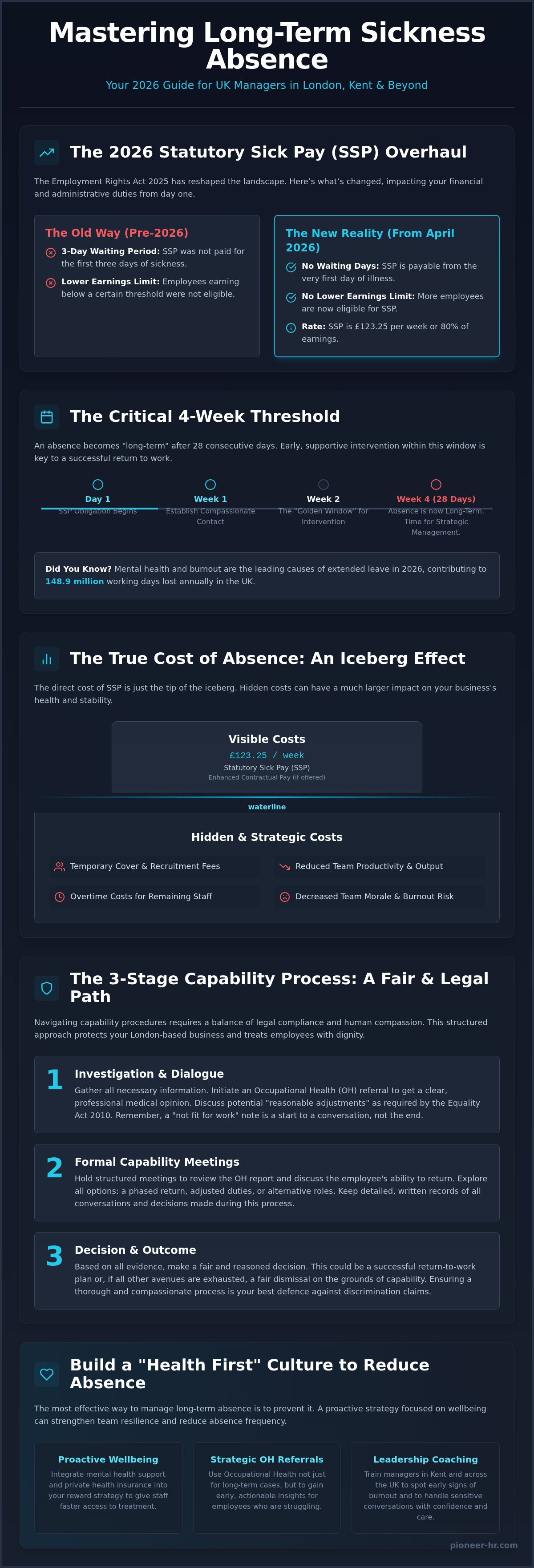
Current trends in 2026 show that mental health and burnout are the leading causes of extended leave. With 148.9 million working days lost annually, the impact on productivity is undeniable. Recovery often depends on the "golden window" of the first two weeks. If you wait until week four to check in, the employee may already feel disconnected or anxious about returning. Early, supportive intervention is the most effective way of managing long term sickness absence uk and preventing a temporary absence from becoming permanent.
The Legal Framework: From SSP to the Equality Act 2010
The Employment Rights Act 2025 has rewritten the rules for every business in the UK. Since April 2026, the three-day waiting period is a thing of the past. You're now responsible for Statutory Sick Pay (SSP) from the very first day of illness. At £123.25 a week, or 80% of earnings, these costs add up quickly. But the real challenge often lies in the Equality Act 2010. If an illness is likely to last twelve months, it may be classified as a disability. This means you have a legal duty to explore reasonable adjustments. A fit note saying "not fit for work" isn't a gag order. It's actually an invitation to start a dialogue about what support the individual needs to eventually return.
Initial Steps for Hove and London Managers
Managing a team in a fast-paced London office or a creative hub in Hove requires a delicate touch. Start with a compassionate contact strategy. We suggest agreeing on a weekly check-in time that works for both parties. Always keep a written log of these interactions. It protects the business and ensures the employee feels heard. You should also review your contracts for enhanced sick pay clauses to understand your specific financial liabilities. If you're unsure how to handle these early conversations, our retained HR support provides the peace of mind that you're following best practices from day one.
The Financial and Strategic Impact of Extended Absence
Managing long term sickness absence uk isn't just a compliance task; it's a significant financial challenge for any growing business. When an employee is away for months, the visible cost is the Statutory Sick Pay (SSP), which stands at £123.25 per week in 2026. However, the hidden costs often bite much harder. You're likely paying for temporary cover, recruitment fees, or overtime for the remaining team members. Productivity naturally dips because specific knowledge and experience are missing from your daily operations. Morale can also sink if the remaining workload becomes unsustainable for others, potentially leading to further absences.
Your reward strategy plays a huge role in how these situations unfold. A well-structured package doesn't just attract talent; it supports them during recovery. If your benefits include private health insurance or mental health support, you might see shorter absence durations as staff get faster access to treatment. Using salary benchmarking ensures you're hiring resilient talent who feel valued and motivated to return. To spot these trends before they become systemic issues, conducting a regular HR Audit is essential for any proactive department.
Contractual vs. Statutory Sick Pay
Many firms choose to offer enhanced occupational sick pay to stay competitive. While this is a generous benefit, it requires a careful balance. Transitioning an employee from full contractual pay to SSP can be a stressful period for both the individual and the business. It's vital to follow the UK government guidance on sick leave to ensure you manage this shift fairly and legally. In the competitive markets of Kent and Sussex, offering contractual sick pay acts as a powerful retention tool that builds deep loyalty within your workforce.
Impact on Team Dynamics and Culture
We often see a "resentment gap" develop when a team has to cover for a long-term absentee for several months. This rarely happens because they lack empathy; it's usually because they're simply exhausted. Leadership coaching helps your managers navigate these tricky social waters without damaging the wider company culture. For high-level strategy and long-term planning, a Fractional Chief People Officer can provide the oversight needed to keep the business moving while an individual recovers. It's about looking at the big picture, not just the next payroll run.
Occupational Health and the Path to Return to Work
When an employee's absence crosses the four-week threshold, the focus shifts from simple monitoring to active rehabilitation. For most businesses, this is the trigger point for an Occupational Health (OH) referral. We recommend initiating this process between weeks four and six. Waiting longer often makes the path back more difficult as the individual becomes further removed from their professional identity. An effective referral isn't just a request for a return date. It's a strategic tool where you ask specific questions about functional capacity. Can they use a screen for four hours? Can they travel into a London office? Can they handle complex decision-making?
In 2026, we've seen a clear shift toward 'Workplace Wellness' reports. These documents move away from vague medical jargon and instead provide a functional assessment of what an employee can actually do. This is vital for managing long term sickness absence uk because it allows you to balance medical advice with your commercial reality. You aren't expected to follow every suggestion blindly, but you must consider them seriously to remain compliant with the Equality Act. If you're unsure how to interpret these reports, our retained HR support provides the expert second opinion you need.
Implementing Reasonable Adjustments
For a Brighton SME, 'reasonable' looks very different than it does for a global firm. You don't have to bankrupt the business to accommodate a return, but you do need to be creative. In London, this often involves hybrid models where an employee works from home more frequently during their phased return. Role redesign is also crucial for mental health cases. This might mean temporarily removing high-pressure client-facing duties or adjusting deadlines to reduce anxiety. The goal is a sustainable return, not a quick fix that leads to another absence.
The Return-to-Work Interview
This meeting is the final bridge back to the workplace. It should never feel like an interrogation. Instead, structure it as a supportive session to confirm the individual is truly ready. We suggest setting clear, low-pressure expectations for the first 30 days back. It's also the time to identify potential relapse triggers. If a specific project or environment contributed to the illness, you need to address it now. A well-conducted interview ensures the employee feels valued while giving the business the clarity it needs to move forward.
Navigating Capability Procedures and Fair Dismissal
Moving from a supportive role to a formal capability procedure is one of the hardest shifts for any leader. We often see employers struggle with the "enough is enough" moment. This usually happens when medical evidence suggests a return to work isn't likely in the foreseeable future, or when the business can no longer sustain the absence. Managing long term sickness absence uk requires a structured three-stage capability process to remain fair. This involves a series of formal meetings where you discuss the medical evidence, explore any remaining adjustments, and issue formal warnings before reaching a final outcome.
The biggest mistake we see is rushing to dismissal before every stone has been turned. You must demonstrate that you've considered every reasonable adjustment, including role redesign or alternative vacancies. If you find yourself facing these high-stakes conversations, our Retained HR Support provides a vital safety net, allowing an objective expert to chair these difficult hearings and ensure every legal box is ticked. This strategic approach protects your business while ensuring the individual is treated with the professional respect they deserve.
Legal Risks: Disability Discrimination and Unfair Dismissal
Under the Equality Act 2010, you must consider the "long-term effect" test. If a condition has lasted, or is likely to last, twelve months, it's often legally classed as a disability. Medical capability is a fair reason for dismissal, but only if the process is impeccable. You must prove the impact on the business is disproportionate to the support you can offer. If you handle contact poorly or apply undue pressure, you risk a claim of constructive dismissal where the employee feels forced to resign due to a breach of trust.
The Dismissal Meeting and Appeal Process
When you reach the final stage, the employee has a statutory right to be accompanied by a colleague or trade union representative. This meeting isn't just a formality; it's the final chance for the employee to provide new information. Your evidence trail must be clear, from the first fit note to the final Occupational Health report. Managing an exit with dignity is essential for preserving your reputation in Sussex and Kent. A professional, compassionate approach ensures that even a difficult ending doesn't damage your employer brand or team morale.
A Strategic Approach: Reducing Absence with Pioneer HR
While the legal and administrative hurdles of managing long term sickness absence uk are significant, the most successful businesses focus on prevention. We believe in building a "Health First" culture where wellbeing isn't just a buzzword; it's a core operational value. For our clients in Hove and London, this often starts with leadership training. We've found that when managers are equipped to spot the early signs of burnout, they can intervene before a team member needs extended leave. It's about moving from a reactive stance to a strategic one.
A Fractional Chief People Officer can be the missing link here. Instead of just dealing with the paperwork, they look at the big picture of your people planning. They help you understand why absences are happening and how to adjust your organisational structure to support a healthier workforce. We act as your partner in navigating these complex employee relations, ensuring you have the professional depth of a full HR department without the overhead costs.
Preventative Wellbeing Strategies
Data is your best friend when it comes to prevention. We use employee engagement surveys to identify stress hotspots within your company before they lead to a crisis. There's also a direct link between salary benchmarking and employee wellbeing. If your staff feel underpaid or undervalued compared to the London market, their stress levels naturally rise, making them more susceptible to illness. By ensuring your rewards are competitive and implementing effective Employee Assistance Programmes (EAPs), you create a safety net that catches issues early.
Why Outsource Your Absence Management?
Handling long-term illness is emotionally draining and legally risky. By outsourcing this to us, you gain access to over 30 years of HR expertise led by Sarah-Jane. We provide objective, third-party mediation for those sensitive capability cases that feel too close to home for internal managers. You'll have peace of mind knowing that every piece of documentation is fully compliant with UK law. With our local Sussex support, you aren't just getting a service; you're getting a dedicated team that cares about your business as much as you do.
Strengthening Your Organisation Through Strategic Absence Management
Successfully managing long term sickness absence uk requires a delicate balance between rigorous legal compliance and the human element of leadership. We've seen how the 2026 SSP changes and the removal of waiting days have increased the pressure on UK employers. However, by focusing on early intervention and leveraging a robust reward strategy, you can significantly reduce the impact of extended leave on your team's productivity and morale. Every step, from the first check-in to the final return-to-work interview, is an opportunity to reinforce your company culture.
At Pioneer HR, we bring 30+ years of strategic HR experience to help you navigate these high-stakes situations. From London to Kent and Hove, we provide the specialist support and fractional CPO expertise needed to lead capability meetings with confidence and care. Book a consultation with Pioneer HR to manage your complex absence cases today. Let's work together to build a more resilient workplace where both your business and your employees can thrive. Your commitment to a supportive environment is the foundation of your long-term success.
Frequently Asked Questions
How long can an employee be on long-term sick leave before I can dismiss them?
There is no fixed legal time limit before you can consider dismissal. It depends entirely on the specific circumstances of the role and your business's ability to sustain the absence. Usually, a formal capability process only begins after you've explored all reasonable adjustments and obtained clear medical evidence. For many London SMEs, this threshold is reached after several months of absence where no return date is in sight.
Do I have to pay Statutory Sick Pay (SSP) for the entire duration of long-term absence?
Statutory Sick Pay is payable for a maximum of 28 weeks. In the 2026 tax year, the weekly rate is £123.25. After this period, the employee may transition to Employment and Support Allowance. Successfully managing long term sickness absence uk involves tracking these dates carefully to ensure correct payment transitions. You aren't required to pay SSP indefinitely, but you must ensure the employee is informed when their entitlement is ending.
Can I contact an employee while they are off on long-term sick leave?
Yes, you have a professional duty to maintain reasonable contact with your staff. It shouldn't be intrusive or feel like an interrogation. We suggest agreeing on the frequency and method of contact early in the absence. Keep the focus on their wellbeing rather than pressuring them for a return date. Poorly handled contact can lead to constructive dismissal claims, so it's vital to keep every interaction supportive and documented.
What happens if an employee refuses to attend an Occupational Health appointment?
You cannot force an employee to attend an appointment, but you can explain the consequences of their refusal. If they decline to participate, you'll have to make management decisions based on the limited information available to you. This often means you can't implement adjustments that might have helped them return to work. It's vital to document that you offered this specialist support and that the individual chose to decline it.
Does holiday continue to accrue while an employee is on long-term sick leave?
Statutory holiday entitlement continues to accrue as normal during periods of long-term illness. Employees can choose to take their paid holiday while they are off sick, which is often helpful if their SSP has already ended. If they are unable to take their leave due to their health, they are generally allowed to carry it over into the next leave year. This applies to all staff across the UK.
Is stress-related absence considered a disability under the Equality Act 2010?
It can be, provided the symptoms have a substantial and long-term adverse effect on the individual's ability to carry out normal day-to-day activities. Under the Equality Act, "long-term" usually means a condition that has lasted or is likely to last at least 12 months. Effectively managing long term sickness absence uk means treating mental health with the same strategic focus as physical ailments to avoid potential disability discrimination claims.
What is the "phased return" and how long should it last?
A phased return is a gradual increase in hours or duties over a set period to help an employee readjust. It typically lasts between four and six weeks. In Kent or London offices, this might involve starting with two days a week or shorter shifts before returning to full contractual hours. The goal is to ensure the return is sustainable and doesn't lead to a quick relapse or further absence.
Can an employee work for another company while on sick leave from mine?
This depends on their employment contract and the nature of their illness. If their contract has a "no outside work" clause, they could be in breach of their terms. However, if the other job is physically or mentally different, it might not automatically be a disciplinary issue. For example, someone off for a physical injury might still be able to perform a sedentary desk job. Always seek HR advice before taking action.


Comments