
How to Reduce Staff Turnover in London: A Strategic Guide for 2026
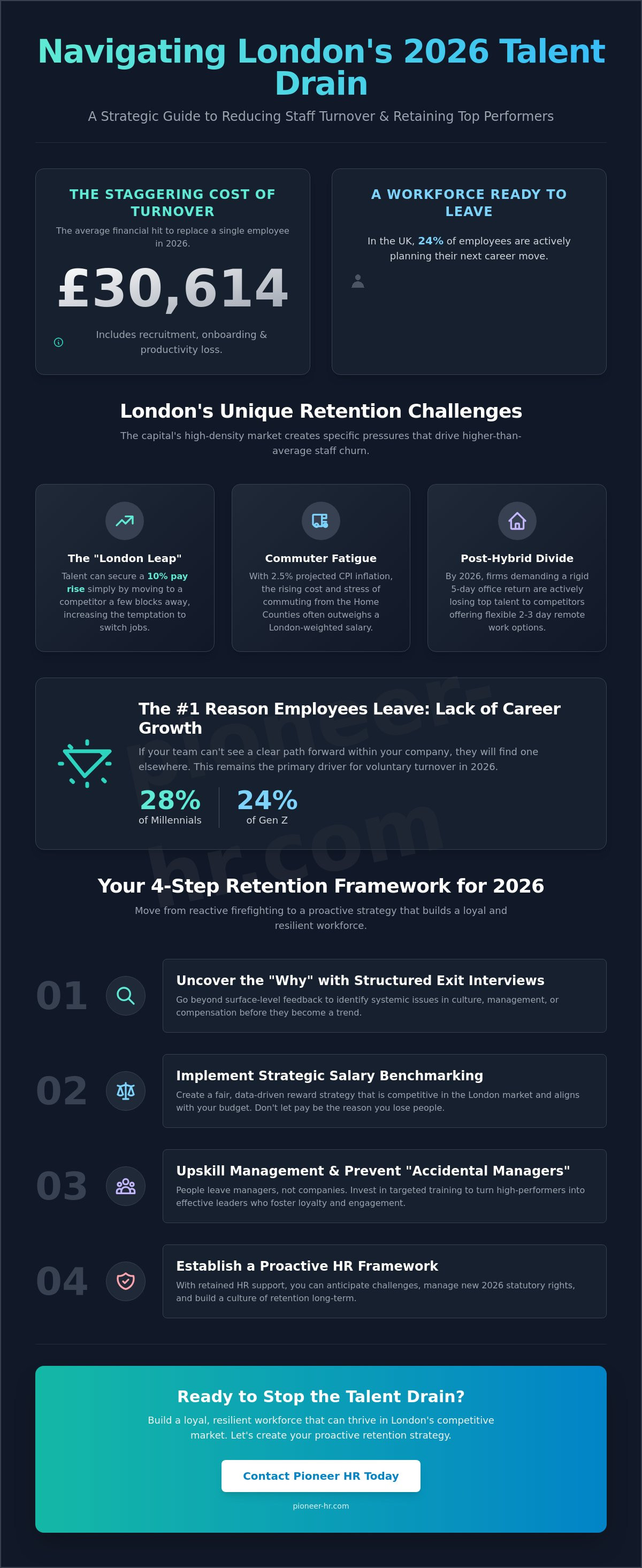
Did you know that replacing a single employee in 2026 costs your business an average of £30,614? With 24% of UK workers currently planning their next career move, learning how to reduce staff turnover London firms experience has become a financial necessity rather than just an HR goal. It's disheartening to see your most talented people leave for a competitor, taking years of institutional knowledge with them and leaving the rest of the team's morale at a low point.
We know it feels like an uphill battle to keep your best talent when the London market is so aggressive. You want a stable, engaged workforce and a reward strategy that actually fits your budget without constantly overextending. This guide provides the actionable strategies and expert HR insights you need to retain your top performers in this competitive 2026 landscape. We'll examine how to manage the impact of the new Fair Work Agency, the April 2026 "day one" parental rights, and how targeted management training can stop the talent drain for good.
Key Takeaways
Understand why the 2026 London job market requires a shift from reactive hybrid policies to a more stable, long-term retention strategy.
Learn how to uncover the genuine reasons for departures through structured exit interviews that go beyond surface-level feedback.
Discover how to reduce staff turnover London firms experience by using salary benchmarking to create a fair, data-driven reward strategy that fits your budget.
Identify the "accidental manager" syndrome and learn how targeted management training can prevent your high-performers from leaving for competitors.
Explore how moving from reactive "firefighting" to a proactive HR framework with retained support can create a more resilient and loyal workforce.
Table of Contents
The Unique Challenges of Staff Turnover in London for 2026
At its core, employee turnover represents the frequency with which staff members exit your organisation within a specific timeframe. In the high-pressure environment of the capital, this figure is more than just a percentage on a spreadsheet; it's a direct reflection of your company culture and market competitiveness. As we navigate May 2026, the UK average turnover rate sits at approximately 35%, yet London businesses frequently see much higher churn due to the sheer density of opportunities. Understanding how to reduce staff turnover London leaders face requires looking past the numbers to the underlying reasons why people choose to stay or go.
2026 has become a pivotal year for retention because we've reached a point of "post-hybrid stabilization." The experimental phase of remote work is over, and employees are now making long-term career commitments based on how well their employers have adapted to new statutory rights. With the April 2026 removal of the service requirement for paternity leave and the abolition of the Statutory Sick Pay waiting period, the "London Premium" is no longer just about a higher salary. It's about how a business supports its people from day one. When a talented team member leaves, the financial hit is significant. Replacing a single employee currently costs an average of £30,614, a figure that accounts for recruitment, onboarding, and the inevitable dip in productivity that ripples through your teams in London and Kent.
Measuring Attrition vs. Turnover in the Capital
We calculate turnover by taking the number of departures in a year, dividing it by the average headcount, and multiplying by 100. It sounds simple, but "healthy" turnover is a relative term. For a fast-moving tech firm in Shoreditch, a 20% churn might be seen as a natural refresh of skills. For a professional services consultancy in Kent, that same figure could signal a crisis. We also need to distinguish between voluntary attrition, where a person resigns to pursue growth elsewhere, and involuntary attrition, such as dismissals. In 2026, tracking these differences helps us identify if your problem is a hiring mismatch or a management failure.
Why London Businesses Face Higher Churn Rates
The "London Leap" is a unique challenge for those based in the City. Because so many competitors are clustered together, a developer or project manager can often secure a 10% pay rise simply by moving to an office two blocks away. This proximity makes the temptation to jump ship much higher than in regional hubs. Commuter fatigue is another critical factor this year. With the UK CPI inflation projected at 2.5% for 2026, the rising cost and stress of the daily trek from the Home Counties into Zone 1 often outweigh the benefits of a London-weighted salary. If your salary benchmarking hasn't kept pace with these specific local pressures, you'll likely find your best talent looking for roles closer to home in Kent or searching for firms with better flexibility.
Identifying Why Employees Are Leaving Your London Business
We often see London leaders surprised when a key team member resigns, yet the signs are usually there long before the notice period begins. Effective exit interviews are your first line of defense, but only if they move beyond surface-level politeness. In a city where the next opportunity is just a tube ride away, understanding the real "why" is the foundation of how to reduce staff turnover london businesses face. According to the latest CIPD employee retention strategies, tracking specific reasons for leaving helps identify systemic issues before they become a wider trend across your department.
Workplace culture in London is unique. It's fast-paced, high-stakes, and often relentless. If your culture hasn't evolved to match the expectations of 2026, you'll find your talent pool shrinking. Career growth remains the primary driver for departures this year, cited by 24% of Gen Z and 28% of Millennials. If your team doesn't see a clear path forward within your walls, they'll naturally look toward the bright lights of a competitor who promises that next step.
The Impact of Hybrid Work and Commuter Culture
By 2026, the "post-hybrid stabilization" has created a clear divide in the capital. Firms demanding a rigid five-day return to the office are losing their best people to competitors offering 2-3 days of remote work. For a professional commuting from Kent, the savings on rail fares and travel time are non-negotiable. Flexibility is no longer a "nice to have" perk; it's a core strategic retention tool. If you're struggling to find the right balance, our retained HR support can help you design a policy that maintains your office energy without sacrificing the autonomy your team now expects.
Career Stagnation and the 'London Leap'
The "London Leap" is a psychological phenomenon where employees feel they must switch companies to secure a promotion or a significant pay rise. In 2026, seeing a peer jump for a 15% increase is a powerful motivator. Without clear internal "growth pathways," your high-performers will look externally to validate their worth. You aren't just competing with other firms for their time; you're competing with their perception of what's possible elsewhere. We recommend building transparent progression frameworks that show exactly what skills are needed to reach the next level, keeping that ambition focused inward rather than outward. This proactive approach is a cornerstone of how to reduce staff turnover london SMEs often overlook.
Combatting Turnover with Strategic Salary Benchmarking and Reward
If you're relying on salary data from 2024 or 2025 to set your current pay scales, you're likely overpaying for some roles while losing your top performers in others. Guessing your pay scales is the fastest way to lose talent in a market where information is everywhere. People talk. With platforms like Glassdoor providing instant transparency, your employees know exactly what their skills are worth in the City. Research into the causes of high staff exits consistently highlights that while pay isn't the only factor, it's the most common baseline for dissatisfaction. Mastering the financial nuances of the capital is a core part of how to reduce staff turnover london leaders must prioritise to protect their bottom line.
Establishing a fair baseline through professional salary benchmarking ensures your offers are rooted in reality. In 2026, the median pay increase across the UK is forecasted at 3.0%, but the cross-sector average is slightly higher at 3.2%. For London-based businesses, these figures are often just the starting point. When a Cloud Architect can command up to £135,000 and a Senior Product Manager can reach £112,500, a blunt "one size fits all" approach to annual raises simply won't work. We help you look at the specific data for your sector to ensure you aren't falling behind your neighbors in Shoreditch or the West End.
Using Market Data to Stay Competitive in London
Using outdated guides is a common trap that drives people away. Your 2026 strategy must account for the 2.5% CPI inflation forecast and the specific local pressures of the capital. We often see firms struggle because they compare their roles against UK-wide averages rather than the hyper-local reality of Zone 1 and 2. Linking your internal pay scales to a robust salary benchmarking uk strategy allows you to defend your decisions with data. It gives your leadership team the confidence to explain why a salary is set at a certain level, which is a vital part of how to reduce staff turnover london organisations face.
Designing a Reward Strategy That Goes Beyond Pay
Base salary gets people through the door, but a holistic reward strategy keeps them there. For London professionals, non-monetary perks like flexible working or career development are often more persuasive than a small cash bonus. Transparent pay structures foster trust and reduce the feeling that staff need to jump ship to get a fair deal. Working with a reward consultancy helps you find budget-neutral ways to improve retention, such as better recognition programs or health benefits that actually provide value to someone living in the capital or commuting from Kent. Communicating this "total reward" package clearly to your existing staff is just as important as the numbers themselves.
Upskilling Management to Foster Long-Term Loyalty
Many London SMEs fall into a common trap: they promote their best technical experts into management roles without providing the necessary people-leadership tools. This "Accidental Manager" syndrome is a silent killer of retention. While your new manager might be a brilliant coder or accountant, they may struggle with the emotional intelligence needed to lead a diverse, high-pressure team in the City. When employees feel misunderstood or undervalued by their direct supervisor, they're far more likely to contribute to the 35% average turnover rate we see across the UK. Professional management is a cornerstone of how to reduce staff turnover london businesses must master to stay competitive.
Poor leadership doesn't just cause a few resignations; it drives your high-performers straight into the arms of your competitors. If a manager can't provide clear feedback or recognise achievements, even a generous London-weighted salary won't keep a talented individual from leaving. This is particularly true in 2026, as new UK employment laws give staff more "day one" rights, making the quality of the daily work relationship the primary reason people choose to stay. Investing in leadership development creates a culture where people feel seen and supported, which is vital when the cost of replacing a single staff member has reached £30,614 in lost productivity and recruitment fees.
The Role of Leadership Coaching in Retention
We view leadership coaching as a strategic investment rather than a luxury cost. It empowers managers to have "stay conversations" long before an employee starts looking at job boards. These proactive discussions focus on what keeps a person at the company and what might tempt them away, allowing you to address issues like workload or career stagnation early. In the 2026 job market, where 24% of workers have one foot out the door, these conversations are your most powerful retention tool. Coaching helps managers navigate the complexities of diverse London teams, fostering an environment where different perspectives are valued. It's about moving away from a command-and-control style to a coaching-led approach that resonates with modern professionals.
Implementing Management Training for Sussex and London Leaders
Whether your leadership team is based in a Shoreditch office or a hub in Kent, their training must reflect the specific pressures of the local business environment. We focus on practical skills like conflict resolution and active engagement strategies. By upskilling your managers, you're not just improving day-to-day operations; you're building a defensive wall against external poaching. We suggest tracking your retention metrics before and after training to see the tangible impact on your bottom line. If your leadership team needs a strategic refresh, our Fractional Chief People Officer services can help you design a management framework that truly supports your long-term goals and reduces the constant need for recruitment.
Implementing a Strategic HR Framework with Pioneer HR
Many London business owners spend their days "firefighting" immediate personnel issues instead of building a long-term foundation. When you're constantly reacting to resignations, you're always one step behind the market. Moving to a proactive people strategy is the definitive answer to how to reduce staff turnover london organisations need in 2026. We help you shift that focus by creating a 12-month retention roadmap that anticipates market shifts, such as the operational launch of the Fair Work Agency on April 7, 2026. This roadmap isn't just a document; it's a strategic commitment to your team's future that replaces panic with precision.
Success in the capital's job market requires a framework that aligns your business goals with the needs of your people. We've seen that firms with a structured approach to engagement and reward are far more resilient against the "London Leap" mentioned earlier. By auditing your current practices, we identify where your culture might be leaking talent and implement the specific systems needed to plug those gaps. This isn't about generic advice; it's about building a bespoke strategy that works for your specific headcount and sector.
The Fractional CPO Advantage for SMEs
Scale-ups in the City often reach a point where they need high-level HR expertise but can't justify a full-time executive salary. This is where a Fractional Chief People Officer becomes a game-changer. Unlike a traditional consultant, a Fractional CPO works as part of your leadership team to identify hidden turnover triggers that data alone might miss. They provide the strategic oversight needed for your reward and engagement initiatives, ensuring every pound spent on retention is working as hard as possible. By conducting a high-level retention audit, they can pinpoint why staff might be looking toward competitors in Shoreditch or Westminster before they actually hand in their notice.
Retained HR Support: Your Partner in People Strategy
Maintaining a modern workforce requires more than just a handbook; it needs continuous, expert attention. Our retained HR support provides London SMEs with a dedicated partner who understands the local landscape. Whether your team is based in a central London office or working from a hub in Kent, we ensure your policies and documentation are fully compliant with the latest 2026 UK employment laws. This ongoing support is crucial for managing delicate employee relations and preventing involuntary turnover. We act as an extension of your business, providing managers across the South East with the confidence to lead effectively and keep their teams engaged. It's a comprehensive approach that simplifies how to reduce staff turnover london firms experience, allowing you to focus on growth while we protect your most valuable asset.
Securing Your Talent for a Resilient 2026
Building a stable team in the capital doesn't have to be a constant cycle of reactive hiring. We've explored how moving from daily firefighting to a proactive 12-month roadmap can save your business the £30,614 average cost associated with a single departure. By combining 2026-ready salary benchmarking with targeted management training, you create a professional environment where your best people actually want to stay. Understanding how to reduce staff turnover london firms face is ultimately about aligning your reward strategy with the real-world pressures of the city.
At Pioneer HR, we bring over 30 years of HR expertise to help you master these unique London and South East market dynamics. We specialize in creating tailored reward strategies for UK SMEs that drive genuine engagement and long-term loyalty. Don't wait for your next high-performer to hand in their notice. Book a consultation with Pioneer HR to audit your London retention strategy today. We're here to help you build a workforce that's as ambitious and resilient as your business itself.
Frequently Asked Questions
What is a 'good' staff turnover rate for a London business?
You should aim for a turnover rate between 15% and 20% in the capital. While the UK cross-sector average sits at 35%, London's high density of opportunities makes a rate below 10% very difficult to maintain for most SMEs. If your rate exceeds 25%, it's usually a sign that your culture or pay scales aren't keeping pace with nearby competitors in the City or Shoreditch.
How much does employee turnover actually cost a UK SME?
It typically costs a business between 1.5 and 2 times an employee's annual salary to replace them. Beyond the average replacement cost of £30,614, you have to account for the "knowledge drain" and the 4 to 6 months it takes a new hire to reach full productivity. For senior London roles, the total financial impact of a single departure can easily exceed £100,000 when lost billable hours are included.
Can better salary benchmarking really reduce my staff turnover?
Yes, accurate benchmarking can reduce departures by up to 50% for roles where pay is the primary motivator. It prevents your best people from feeling undervalued when they see higher rates at a firm just a few tube stops away. It's the most effective way to address how to reduce staff turnover london organisations face when they're competing for in-demand tech or financial talent in a transparent market.
What are the top non-monetary rewards London employees want in 2026?
Flexible working remains the priority, but "commuter subsidies" and "wellness days" are seeing a massive surge in popularity this year. In 2026, 45% of London professionals cite a positive work-life balance as being more important than a minor 3% pay rise. Providing access to high-quality leadership coaching also ranks highly as it shows a genuine commitment to their long-term career progression within your firm.
How do I conduct a 'stay interview' without making staff uncomfortable?
Position the meeting as a casual "career check-in" rather than a formal HR review. Focus on open questions like "What part of your role makes you want to jump out of bed in the morning?" or "What's one thing you'd change about your daily routine?". Keep the atmosphere supportive and listen more than you talk. This proactive approach is a key part of how to reduce staff turnover london leaders use to keep their best people.
Is high staff turnover always a sign of bad management?
Not always, but poor management is the primary driver in 75% of voluntary departures. Sometimes external market shifts or new industry regulations are the cause. However, if one specific department in your London or Kent office has significantly higher churn than the rest of the company, it's a clear signal that the management style in that team needs an urgent audit and potentially some targeted training.
How does London's hybrid work culture impact retention in Kent-based firms?
It creates a "talent tug-of-war" where Kent firms often lose staff to London companies offering higher pay and better remote flexibility. To compete, regional businesses must highlight the lack of a stressful commute and offer comparable flexibility. Many firms in the South East are now using Fractional CPO services to design regional reward strategies that can successfully rival the City's higher base salaries.
What is the first step a business should take when turnover spikes?
Conduct an immediate HR audit to identify specific patterns in your departure data. You need to know which roles are leaving and whether they're all moving to the same group of competitors. Once you have these numbers, speak to your remaining high-performers to gauge their current satisfaction levels. This data-driven first step allows you to move from reactive firefighting to a strategic retention framework that actually works.


Comments