
How to manage poor performance at work fairly and constructively
A fair response to poor performance starts with a clear opportunity to improve, not an immediate disciplinary process. Managing poor performance at work in the UK means setting out what needs to change, understanding what may be getting in the way and offering appropriate support before considering formal action. The approach should be consistent, documented and proportionate to the concern.
Managing poor performance at work in the UK can be challenging, especially when you want to protect working relationships while maintaining business standards. This guide explains how to identify a performance issue, prepare for a constructive conversation and invite an employee to reflect on their work. It also covers practical support for improvement and how a performance improvement plan can turn expectations into clear objectives and review points.
Table of Contents
Constructive conversations and employee self-appraisal
Address concerns early with specific, constructive conversations. The Acas Code supports fair and consistent procedures: explain the concerns, listen to the employee’s response and give them an opportunity to improve before dismissal.
Start a constructive performance conversationArrange a private meeting and describe the gap with a clear example, such as missed agreed deadlines. Explain the effect on colleagues or work without blaming the employee, then invite their perspective. Focus on evidence and expectations, not assumptions about attitude. At a formal capability meeting, an employee has the right to be accompanied by a work colleague or trade union representative.
Invite employee self-appraisalBefore deciding what to do, ask the employee to assess their recent work against agreed responsibilities. For example, ask which deadlines they met, where work fell short and what obstacles arose. Compare their account with your records and specific examples, then note areas of agreement and disagreement. Recognise positive contributions as well as areas for improvement to keep motivation and engagement part of the discussion.
Involve employees in finding solutionsAsk the employee to suggest practical changes and discuss options together, such as clearer priorities, coaching or training. Agree who will take each action, and record the support, expectations and review arrangements. Shared problem-solving gives the employee a voice in how improvement happens. Still, check that the proposed steps address the cause of the concern rather than treating agreement as a substitute for listening.
If sickness has affected someone’s ability to work, discuss appropriate support for their return and record agreed steps. The Employment Rights Act 1996 identifies capability as a potentially fair reason for dismissal, but that does not make dismissal automatic. Consider the circumstances, support provided and the employee’s response, and follow a fair process before reaching a decision.
Section A: What Is Managing Poor Performance?
First, identify whether the concern relates to capability or conduct. This distinction helps you choose a fair, proportionate procedure.
Define poor performance and capabilityCompare the employee’s work with the responsibilities, targets and standards expected for their role. Poor performance is a gap between those expectations and actual results; capability concerns whether the employee can meet the requirements. For example, repeated errors in completed reports may point to a skills or training gap. Before deciding the employee could meet the standard, check that expectations were clear and resources adequate.
Distinguish capability from conductConsider whether the employee cannot meet the standard or is choosing not to follow a reasonable instruction. A team member struggling with unfamiliar software may need training, while deliberately ignoring an established reporting process may raise a conduct concern. Assess the evidence and circumstances rather than assuming intent. If the cause is unclear, gather relevant facts and give the employee a chance to explain.
Choose the appropriate processFor a manageable capability concern, such as recurring delays against agreed deadlines, start with informal feedback. Explain the gap, clarify the expected standard and discuss support that could help. If concerns persist, follow the organisation’s formal capability procedure. Explain the issue and each step clearly, as formal processes can include hearings and appeals. Serious conduct concerns may call for a disciplinary procedure instead.
Keep capability and disciplinary processes separateApply a capability process when the employee lacks the skills, knowledge or ability to meet role requirements. Use disciplinary procedures where evidence suggests misconduct, such as deliberately refusing a reasonable instruction. Don’t treat inability as wrongdoing: the distinction shapes the support offered and the evidence considered. Under section 98(2)(a) of the Employment Rights Act 1996, capability is a potentially fair reason for dismissal, but a fair procedure remains important.If performance does not improve after the stated steps, consider whether a suitable alternative role is available. Moving an employee to a more junior role requires mutual agreement. Record any role change in writing.
Performance improvement plans
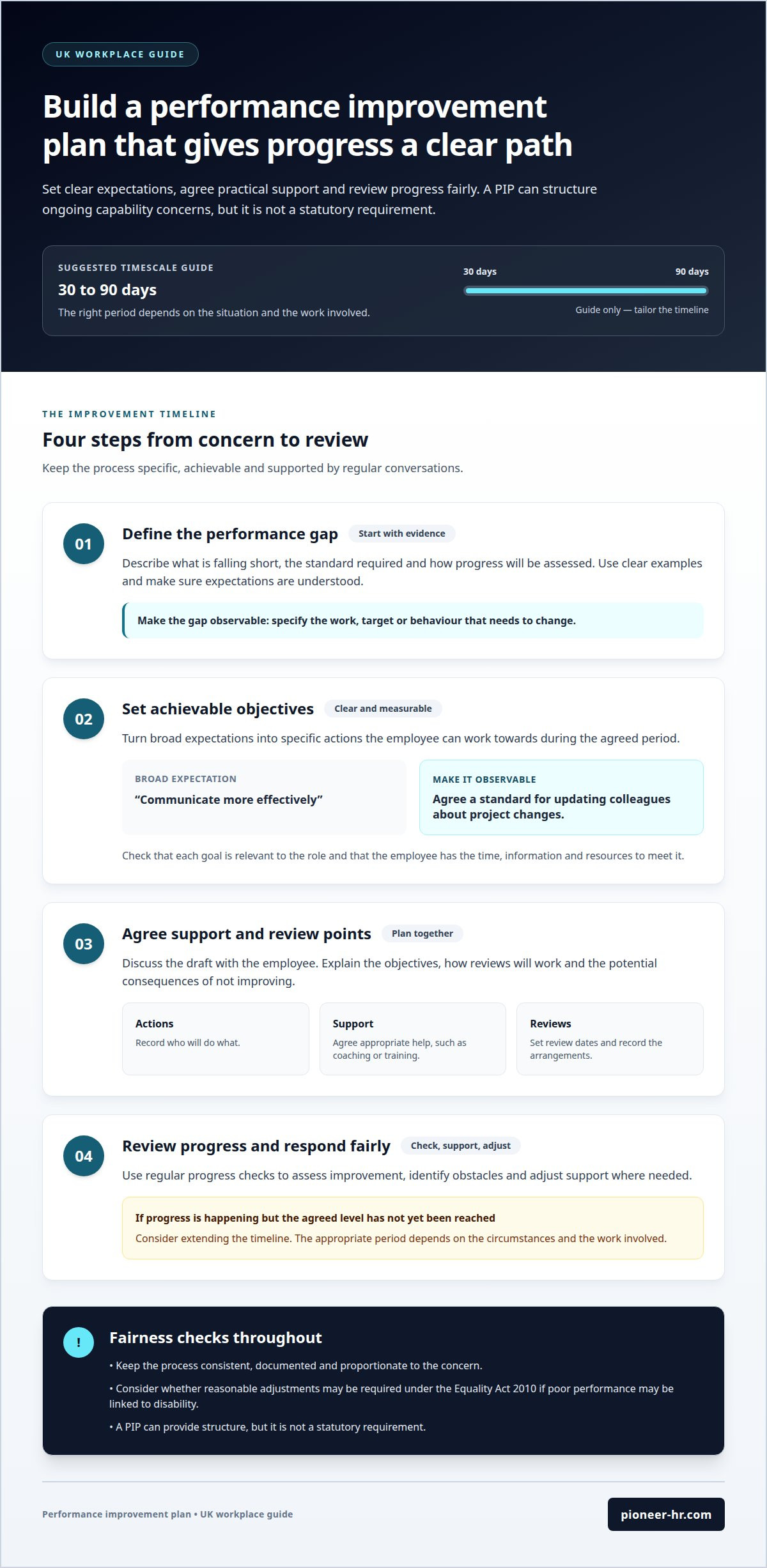
Managing poor performance at work in the UK calls for clear objectives, appropriate support and regular review. A performance improvement plan (PIP) is not a statutory requirement, but it can structure how you address ongoing capability concerns.
Agree improvement objectives and timescalesSet out the specific performance gap, the required standard and a reasonable period for improvement. UK employers commonly use 30 to 90 days as a guide for a PIP, although the appropriate timescale depends on the situation and work involved. Include review dates and explain how progress will be assessed. If the employee improves but hasn’t reached the agreed level, consider extending the timeline.
Set measurable, achievable improvement goalsTurn broad expectations into observable actions. For example, replace “communicate more effectively” with an agreed standard for updating colleagues about project changes. Confirm the employee has the time, information and resources to meet each goal. When managing poor performance at work in the UK, set goals that are achievable within the agreed period and relevant to the role. Regular progress checks can surface obstacles and help you adjust support.
Reach agreement on the improvement planDiscuss the draft with the employee and make sure they understand the objectives, review process and potential consequences of not improving. Record agreed actions, support, review dates and any points still under discussion. A formal performance improvement note should set out the problem, required improvement, timescale, review date and employer support. Give the employee the right to appeal a decision to issue the note.
Consider support, training and adjustmentsBefore disciplinary action, consider whether training, coaching, mentoring or clearer instructions could address the skills gap. Discuss practical support and record what the employer will provide. According to UK legislation, the Equality Act 2010 may require employers to consider reasonable adjustments where poor performance may be linked to disability. Options can include more time for written tasks, adjusted shifts or specialist equipment. A first formal note should warn that failure to improve could lead to a final written warning and ultimately dismissal.
Managing poor performance
Manage concerns with consistent expectations, timely action and a structured review of the reasons behind a performance gap. Address issues early: leaving them unresolved can affect productivity and colleagues.
Set clear standards and review evidence. At the start of employment, explain the role’s responsibilities, targets and resources. If a team member misses deadlines, establish whether workload, unclear instructions or ability contributed before drawing conclusions. Record examples and feedback, then explain the impact on work. Make the purpose and next steps clear so an informal discussion is not mistaken for an undocumented warning.
Check whether disability may affect performance. According to UK legislation, the Equality Act 2010 may require employers to consider reasonable adjustments where poor performance may be linked to disability. Discuss practical barriers and consider changes such as additional time for written tasks, adjusted shift patterns or specialist equipment. Address the employee’s ability to meet role requirements after considering relevant adjustments, rather than treating disability-related difficulties as misconduct.
Follow a fair, documented procedure before dismissal. Explain which standards remain unmet, what action the employee must take, and what support is available. Give appropriate warnings under your policy and allow a genuine opportunity to improve. At a formal capability meeting, section 10 of the Employment Relations Act 1999 gives an employee the right to be accompanied by a fellow worker, a trade union representative, or a union official, according to UK legislation. Consider an appeal and any suitable alternative role before deciding dismissal is necessary.
Apply the ACAS Code consistently. Keep records of meetings, evidence, decisions and the reasons for each step, so the process can be understood and reviewed. According to UK legislation, an employment tribunal may adjust compensation by up to 25% if an employer unreasonably fails to follow the ACAS Code of Practice. For help aligning people decisions with organisational priorities, explore Fractional Chief People Officer support.
Pioneer HR
When performance concerns recur or managers need help applying internal processes, Pioneer HR provides practical support. Retained HR Services offers guidance on day-to-day people issues, while a Fractional Chief People Officer can help align people priorities, management practice and organisational objectives.
If concerns point to unclear expectations or wider engagement challenges, Employee Engagement Surveys can help identify workforce themes. Salary Benchmarking and Reward Strategy may also be relevant when the issue involves role expectations or reward structures rather than an individual capability gap. Start by identifying what is affecting performance and what your organisation needs to address.
Contact Pioneer HR to discuss the people challenges your organisation is working through.
Make performance conversations part of ongoing development
A thoughtful approach to managing poor performance at work in the UK can also reveal where expectations, role design or wider workplace practices need attention. Use each review to consider whether managers have the tools and clarity to support consistent performance, not only whether an individual has met a target. That perspective helps turn a difficult issue into a chance to strengthen how the organisation works.
Pioneer HR provides Retained HR Services, Salary Benchmarking and Reward Strategy for UK employers. These services can help you review your HR approach, pay structures and reward framework alongside individual performance concerns.
If you’d like to discuss the challenges your organisation is facing, contact Pioneer HR for support. A clear, considered next step can help you move forward with confidence and build a constructive approach for employees and managers alike.
Frequently Asked Questions
What counts as poor performance at work under UK employment law?
Poor performance generally means an employee is not meeting reasonable standards or requirements for their role. Examples include recurring errors, missed agreed deadlines or work that falls short of the expected quality. Assess the concern against clear role expectations and evidence, not a manager’s personal preference. Consider whether inadequate resources, unclear instructions or a skills gap contributed.
How should a UK employer manage and document poor performance fairly?
Address concerns promptly, explain the specific shortfall and give the employee a chance to respond. Keep a factual record of relevant examples, meetings, agreed actions, support provided and progress reviews. For instance, note which project deadline was missed and the circumstances the employee described. Apply the organisation’s procedure consistently and record the reasons for decisions, including a decision to close the matter.
What steps should a performance improvement plan include in the UK?
A useful plan identifies the performance concern, the required standard, how progress will be assessed and what support is available. Set review points, name who will provide training or resources, and explain possible next steps if improvement is insufficient. Give the employee a copy and record their comments. If work priorities change during the plan, document agreed revisions so the assessment remains fair.
What notice and review periods are typical for a UK performance improvement plan?
UK employers commonly use 30 to 90 days as a guide for a performance improvement plan, but the suitable period depends on the work and improvement required. A formal performance improvement note may use a longer timescale, with three to six months given as an example. Set review dates that allow enough time to demonstrate progress, and consider an extension when improvement is evident but incomplete.
How do capability and disciplinary procedures differ under UK employment law?
A capability procedure addresses whether an employee can meet role requirements, perhaps with training or clearer instructions. A disciplinary procedure addresses alleged misconduct, such as deliberately breaching a known workplace rule. The distinction shapes what the employer investigates and how it responds. If a concern involves both performance and conduct, identify each issue separately and explain which procedure applies.
When can an employer dismiss an employee for poor performance in the UK?
An employer may dismiss for capability if performance remains inadequate after a fair process, appropriate support and a reasonable opportunity to improve. Explain the concerns, issue relevant warnings and consider whether a suitable alternative role is available. Dismissal should be a last resort: tell the employee the reasons and give them the opportunity to appeal. Follow the employer’s procedure and take the circumstances into account.



Comments