
London Professional Services Salary Guide for Employers
What if the salary figure that looks right for your London firm is based on the wrong role, seniority or type of organisation? A professional services salary benchmark London employers can use effectively needs more than a headline number. It should reflect the work people do and the context in which your firm operates.
Salary guides and recruitment data can be difficult to compare because sources may define roles differently or use different methods. Market competitiveness matters, but pay decisions also need to fit your organisation. A single figure rarely tells the whole story.
This guide explains how to find relevant London comparisons, assess benchmark sources and use market evidence as one part of a considered reward decision. You’ll see how role scope, seniority and total reward affect comparisons, and how internal salary information can add context. Pioneer HR’s project-based salary benchmarking compares internal salaries with industry standards to help employers interpret the evidence alongside their business priorities.
Table of Contents
What a professional services salary benchmark in London can, and cannot, tell you
How to compare London salary benchmarking approaches for professional services
How to make London professional services roles genuinely comparable
How employers can use a London salary benchmark in a pay review
How Pioneer HR supports professional services salary benchmarking in London
What a professional services salary benchmark in London can, and cannot, tell you
A salary benchmark is a reference point based on pay data for roles considered comparable. It can help you see how your organisation’s pay sits against a relevant market, but it isn’t a guaranteed rate or a universal answer for everyone with the same job title.
A salary benchmark can indicate how comparable roles are paid in a defined market; it cannot set the right salary for every individual or make an employer’s reward decision.
To use a professional services salary benchmark effectively, check which roles and organisations the data represents and whether it reports base salary or includes wider reward. Bonuses and benefits can change the overall package, so comparing base salary alone may give you an incomplete picture.
Why London professional services roles need closer comparisons
Location matters, but it doesn’t make two jobs equivalent. Similar titles can involve different responsibilities, levels of decision-making and experience. For example, a consultant delivering a defined workstream may have a different remit from one leading client engagements or managing a team.
The same care applies across accountancy and legal work. A role’s specialism, client responsibility and autonomy can affect its scope, even when the titles sound alike. These sectors provide useful context, but they are not interchangeable salary markets. Compare the actual work and the organisations represented in the data. The broader Income in the United Kingdom overview also illustrates why income data needs context, including its source and geographic coverage.
What a salary benchmark does not decide for an employer
External market evidence is one input to a pay decision. It doesn’t set your internal pay structure, determine how roles relate to one another or resolve choices about budget and the wider reward offer. Two organisations may interpret similar market evidence differently because their structures and priorities differ.
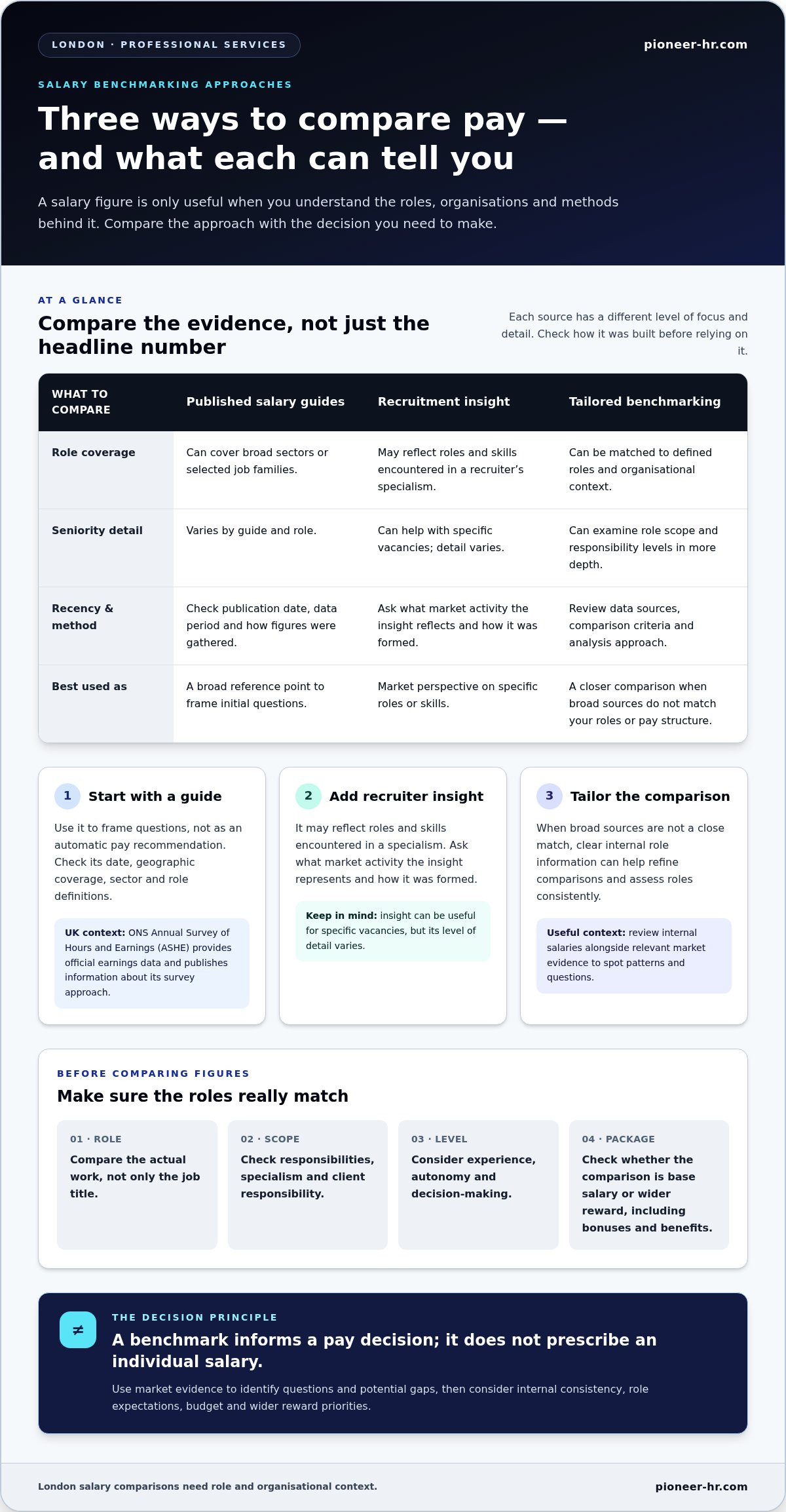
Use the comparison to identify questions and potential gaps, then weigh the findings against internal consistency, role expectations and reward priorities. A benchmark informs a decision; it doesn’t prescribe an individual salary. Pioneer HR’s salary benchmarking service includes market data analysis and reports comparing internal salaries with industry standards. This tailored view helps employers interpret external evidence in their organisational context, rather than treating a London figure as an automatic instruction.
How to compare London salary benchmarking approaches for professional services
Different sources answer different questions. A published guide can offer a broad reference point, recruitment insight can reflect roles currently being discussed in the market, and tailored analysis can relate external evidence to your organisation’s jobs and pay structure. Choose the approach that fits the decision you need to make and the level of detail required.
When published salary guides are a useful starting point
Use a guide to frame your initial questions, not as an automatic pay recommendation. Before relying on a figure, check its publication date, geographic coverage, sector and role definitions. A London figure may cover a different mix of employers or responsibilities from those in your firm. The ONS Annual Survey of Hours and Earnings (ASHE) provides official earnings data and publishes information about its survey approach, helping readers understand what the figures represent.
When tailored salary benchmarking adds decision-making value
Detailed analysis can help when broad sources don’t provide a close match or when a pay review needs to assess several roles consistently. Clear internal role information, including responsibilities and decision-making level, helps refine external comparisons. Reviewing internal salaries alongside relevant market evidence can reveal patterns and questions for your organisation to consider, without dictating a pay outcome.
Pioneer HR’s UK salary benchmarking and reward support brings market data analysis together with reports comparing internal salaries against industry standards. This project-based work helps employers interpret findings in the context of their organisation.
How to make London professional services roles genuinely comparable
Before comparing figures, build a clear picture of each role. A title is a useful label, but rarely captures the full level of accountability, expertise and influence required. Use a role-matching checklist to record the details that matter before bringing salary data into the discussion.
Job title: Record the title, but don’t treat it as proof that roles match.
Scope: Note the core accountabilities, complexity of work and breadth of the remit.
Decision-making: Identify the decisions the role owns and its responsibility for clients, teams or outcomes.
Experience: Set out the relevant expertise and experience needed to perform the work.
Reward: Record base salary separately from variable pay, benefits and other reward elements.
Matching job scope matters more than matching titles because pay comparisons are meaningful only when the work, accountability and level of contribution are genuinely similar.
Match responsibilities and seniority, not job titles alone
Look at what the role involves day to day. In a consultancy, does the person deliver defined analysis or lead client engagements? In accountancy, do they handle assigned work or oversee a complex portfolio and guide others? In legal work, do they contribute under supervision or manage client matters and exercise broader judgement? These distinctions can separate entry-level, experienced, management and senior leadership roles, even when titles overlap.
A consistent grading structure can describe differences in responsibility and complexity across your organisation. Pioneer HR’s job grading support can provide a framework for comparing roles systematically instead of relying on titles alone.
Keep location and reward components in view
Check that the data reflects London roles and the relevant professional services segment. Note the data’s date and coverage too. The ONS Official UK Earnings Data link leads to the 2023 Annual Survey of Hours and Earnings bulletin, so its reference period matters when interpreting it alongside other sources. Assess a professional services salary benchmark used by London employers against the roles and market evidence it actually represents.
Compare base salary with base salary first. Then consider bonuses or other variable pay, benefits and the overall package as separate elements. Hybrid working may matter to employees, but don’t assume it is a fixed substitute for salary. Consider it as part of the broader offer without assigning it an unsupported monetary value.
How employers can use a London salary benchmark in a pay review
A benchmark is most useful when it supports a clear decision rather than becoming the decision itself. A structured review helps employers distinguish what market evidence shows from what the organisation can afford, what employees expect and which wider reward priorities matter.
Define the decision. Be clear whether the review concerns a particular role, a pay range or the organisation’s wider approach.
Validate the roles. Check that job scope and seniority match the comparisons being used.
Review the evidence. Consider the sources, dates, coverage and assumptions behind the findings.
Assess the gaps. Look at differences against relevant market evidence and consistency across internal roles.
Document the action. Record the findings, decisions, rationale and any follow-up needed.
Turn benchmark findings into a proportionate review
Not every difference between internal pay and a market reference calls for a change. Identify which roles or ranges merit further discussion, then consider the size and context of each gap alongside internal relationships between roles and organisational priorities. Keep evidence-led findings separate from budget choices, employee expectations and decisions about the wider reward offer. Recording data sources, role assumptions and the reasons for action, or no action, makes the review easier to explain and revisit.
Communicate decisions with care
Market data can help explain how a role has been assessed, but it doesn’t guarantee an individual increase or outcome. Be clear about what the comparison covers, its limitations and how it informed the decision. This supports measured conversations with employees and managers without presenting a market figure as an automatic entitlement or a complete account of your reward approach.
If your review raises broader questions about how pay, benefits and other reward priorities fit together, Pioneer HR’s reward consultancy guide offers further context for taking a joined-up view.
For a structured review grounded in internal roles and relevant market evidence, explore Pioneer HR’s salary benchmarking support. A professional services salary benchmark can inform a considered decision, while the final approach reflects your organisation’s priorities and circumstances.
How Pioneer HR supports professional services salary benchmarking in London
A professional services salary benchmark is useful when it reflects more than market figures. Pioneer HR’s project-based salary benchmarking brings internal salary information together with market evidence, helping employers understand how their pay compares with industry standards and what the findings mean in their organisational context.
The aim isn’t to prescribe a salary or promise a particular outcome. It is to give employers a clearer basis for discussion: which roles are being compared, what the evidence indicates and where further review may be worthwhile. That distinction supports considered decisions when balancing external competitiveness with internal consistency and available budgets.
What a tailored benchmarking project can help employers examine
Start with the employer’s question and the roles it relates to. Clear information about responsibilities, seniority and current salary arrangements helps frame relevant comparisons and makes the analysis easier to interpret. A project can help employers see where internal salaries sit against market evidence, identify areas for discussion and bring greater structure to reward decisions.
Where relevant, the findings can inform wider reward conversations, but benchmarking need not become a broader strategy exercise unless that reflects the organisation’s needs. Pioneer HR’s salary benchmarking connects market data with internal salary information, so you can consider the results alongside your roles and priorities.
Choose a practical next step for your organisation
Before starting, define which roles you want to review, what decision the analysis should support and the timeframe you’re working towards. This gives the project a clear focus and helps ensure the evidence is useful for the pay or reward discussion ahead.
Founder Sarah-Jane brings over 30 years of industry experience, combining practical HR and reward knowledge with an understanding of how organisations use market insight. For employers in London and across the UK, this experience can help turn benchmarking findings into a clearer, more considered conversation about pay.
If you’re planning a pay review or want to understand how your internal salaries compare with industry standards, discuss a tailored salary benchmarking project with Pioneer HR. The analysis can focus on the roles and decisions that matter to your organisation, without treating any market figure as a predetermined answer.
Make your next pay review more considered
A useful professional services salary benchmark for London employers starts with relevant comparisons. Roles should match in scope and seniority, and the data should be understood in context. Published guides and recruitment insight can help frame the picture, while tailored analysis can bring market evidence closer to your organisation’s roles and internal pay structure.
Use benchmark findings as evidence, not instructions. They can highlight areas for review, but decisions also involve budgets, internal consistency and the wider reward priorities that matter to your organisation. Keeping these factors distinct makes it easier to explain both the evidence and the choices made.
Pioneer HR provides project-based salary benchmarking and reward strategy support to help employers interpret findings thoughtfully. Founder Sarah-Jane brings over 30 years of industry experience and practical HR and reward perspective to the discussion.
If you’re preparing a review, start by clarifying which roles and decisions the analysis needs to support. Discuss a tailored salary benchmarking project with Pioneer HR and take a clear, considered next step for your organisation.
Frequently Asked Questions
What is a salary benchmark for a professional services role in London?
A salary benchmark is a comparison point based on pay information for roles with similar responsibilities and seniority. A professional services salary benchmark for London employers can show how pay compares with relevant market evidence, but it isn’t a guaranteed rate or automatic recommendation. Its value depends on whether the source reflects the role, sector and location, and whether it reports base salary alone or includes wider reward.
How do I know whether a London salary benchmark is relevant to my firm?
Check whether the data matches the role’s responsibilities, seniority, professional services area and location. Then look at when the information was collected, how roles are defined and which reward elements the figures include. A broad London figure can frame a discussion, but may not closely represent a specialist role or your organisation. Relevance depends on the fit between your question and the source’s scope.
Should London employers use a salary guide or tailored benchmarking?
A published salary guide can provide a useful starting point for understanding market context. Tailored benchmarking can suit a decision that needs closer role comparisons or a review of internal salaries against market evidence. The right approach depends on the roles involved, the decision you need to make and the detail each source provides. You can use broad information to orient a review, then apply deeper analysis to specific roles.
Do salary benchmarks include bonuses and benefits?
Not always. One source may report base salary, while another may include variable pay or describe wider reward. Check what each figure represents before comparing it. Keep base salary, bonuses and benefits distinct in your analysis, then consider the overall package in context. Figures labelled as compensation aren’t necessarily like-for-like if their components, definitions or data sources differ.
How often should a professional services firm review salary benchmarks?
There’s no single review schedule that fits every UK employer or role. Revisit benchmark evidence when it needs to inform a pay decision, a review of your reward approach or a response to meaningful organisational change. Pay attention to the source date and data period, as these affect how current the comparison is. Avoid presenting older information as a current view of the London market.
Can a salary benchmark tell me exactly what to pay an employee?
No. A benchmark provides external context, but it doesn’t set an individual’s salary or guarantee an increase. Employers also need to consider role scope, relevant experience, internal consistency and organisational priorities. Treat the evidence as one input to a considered decision, not a prescribed figure. Recording the comparison and reasoning behind the outcome can make the decision clearer and more consistent.
How can salary benchmarking support a London professional services pay review?
Salary benchmarking can show how internal salaries compare with relevant market evidence and help identify roles or pay ranges for closer review. The findings can inform reward discussions, but they don’t determine the outcome on their own. Accurate role matching, suitable data and internal consistency all matter. Pioneer HR’s project-based benchmarking compares internal salaries with industry standards, helping employers interpret findings in their organisational context.



Comments